Voir les plats
Vérifiez les données de référence des aliments sélectionnés.
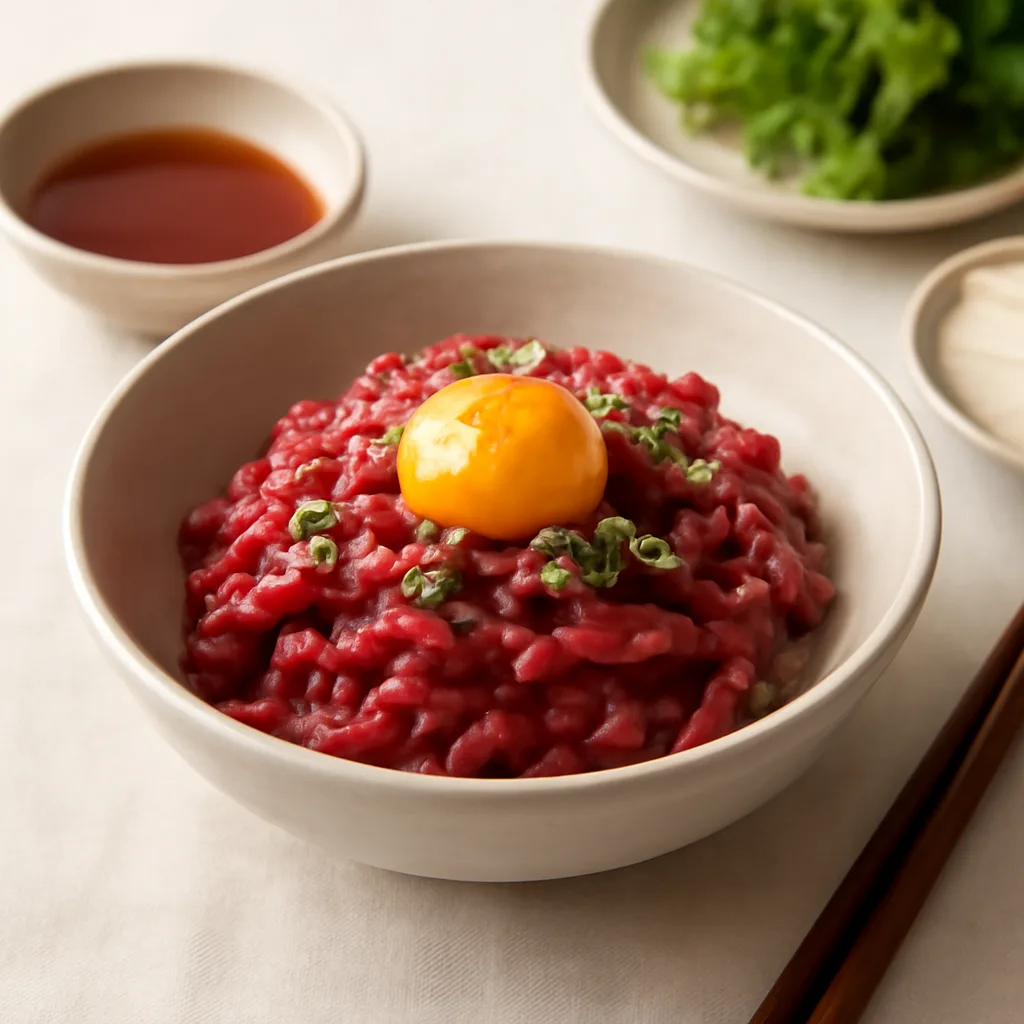
Yukhoe de bœuf
Le yukhoe de bœuf est un plat préparé en tranchant finement du bœuf frais puis en le mélangeant avec une marinade; il est caractérisé par une texture tendre et une saveur riche. Il convient comme amuse-bouche alcoolisé et peut être préparé rapidement.
Ingrédient principal
Thèmes associés
0
Consultation0
J'aime1
Recommandation AI0
CrééÀ propos de ce plat
Beef yukhoe is a simple dish served cold with thinly sliced raw beef and a light sauce made from soy sauce, sesame oil, sugar, and minced garlic. Because the cooking time is short, the quality hinges on the state of the meat, the slicing thickness, and when the sauce is added. The provided composition uses 200 g of beef with 1 tablespoon each of soy sauce and sesame oil to achieve a savory, salty flavor. Prepare the meat so it is suitable for raw consumption, keeping it as cold as possible from trimming to plating. Mix the sauce in advance, but toss with the meat just before serving to prevent excess moisture and to keep the grain intact. Sesame seeds can be sprinkled at the end to add aroma and a chewy texture, and the chopped scallion suggested in the steps can be prepared and served if available. This dish does not use heat, so it’s good to prepare within about 15 minutes, but it is not an endeavor to enhance flavor through cooking. If the quality of the meat itself and the cold temperature are not satisfactory, it may be more appropriate to choose another beef dish.
Goût et texture
Thinly sliced beef is tender and juicy to chew, and the toasty aroma of sesame oil wraps around the meat’s mild flavor. Soy sauce and garlic add umami and aroma, and the gentle sweetness of sugar softens the edge of the saltiness. If the sauce sits too long, moisture may leach from the surface of the meat, creating liquid on the plate and loosening the texture. When mixed right after preparation and chilled, the sauce sheen and the grain of the meat feel relatively more distinct.
Clé pour réussir
- Prepare raw beef while fresh and keep it cold while trimming. If the meat becomes lukewarm, you cannot expect a crisp texture and clean taste, so if preparation takes long, briefly chilling before plating is beneficial.
- Slice the meat as thin as possible and along the grain to reduce chewiness. If the meat slides or mashes on the knife, chill the meat further and slice it in one long stroke.
- Before adding to the meat, mix the soy sauce, sesame oil, sugar, and minced garlic evenly. If sugar clumps in one area, it can burst with sweetness, so use it only after the grains are dissolved.
- Toss the sauce lightly just before serving the meat. If beaten too long, the delicate slices may be damaged and moisture can form, so stop when the surface is coated thinly.
- Sprinkle sesame seeds on the plate at the end to keep the nutty aroma and garnish intact. If you add chopped scallion, be sure to blot excess moisture and use only a small amount so the sauce doesn’t become too thin.
Erreurs courantes
- If the sauce is added too early and the plate becomes watery, the meat may have released moisture. Next time, prepare the sauce and meat separately chilled, then mix just before eating.
- If the meat pieces are thick or cut along the grain, they may feel chewy. Cut thinner and change the direction so the grain aligns for easier chewing.
- If the soy flavor is too strong and masks the beef, the sauce covers the surface too much. Don’t pour all the sauce at first; mix part of it, then add more as needed.
- If the sesame oil aroma is heavy and the overall dish feels rich, the sauce ratio may be too strong for the amount of meat. Instead, reduce the sesame oil and soy sauce slightly so the meat surface is only lightly coated.
Idées d'application
- Gently crush sesame seeds to release aroma more quickly than whole sesame seeds, but don’t grind too finely or you’ll dull the smooth texture of the meat; crumble it slightly.
- Adding chopped scallion provides a sharp, fresh note, but if you don’t want the scallion fragrance to come forward more than the meat, use only a very small amount as a finishing garnish.
- If you want less sweetness, start by adding half the sugar and taste the soy-garlic flavor first. Note that removing all sugar can make the salty flavor more pronounced in the sauce.
Idées d'accompagnement
- Spread the finished yukhoe on a cold plate to prevent clumping and ensure even coating of the sauce. If you can’t chill the plate in advance, serve immediately after plating.
- Top with sesame seeds and chopped scallion right before eating to preserve aroma and color. If you didn’t prepare scallion, sesame seeds alone also pair well with the provided ingredients.
- When serving as a party snack, portion out servings rather than spreading a large amount at once, to maintain the temperature and texture of the beef.
Ingrédients essentiels
bœuf
préférence pour une viande fraîche
sauce soja
huile de sésame
sucre
ail haché
Ingrédients optionnels
graines de sésame
pour garniture
Ordre de cuisson
Coupez le bœuf en fines tranches et préparez-le.
Préparez une marinade en mélangeant l’ail haché, la sauce soja, l’huile de sésame et le sucre.
Mettez la marinade sur le bœuf tranché et mélangez bien.
Saupoudrez de graines de sésame et d’oignons verts hachés pour la finition.
Disposez sur une assiette et servez bien frais.