عرض الوصفات
تحقق من بيانات المعايير للطعام المختار.
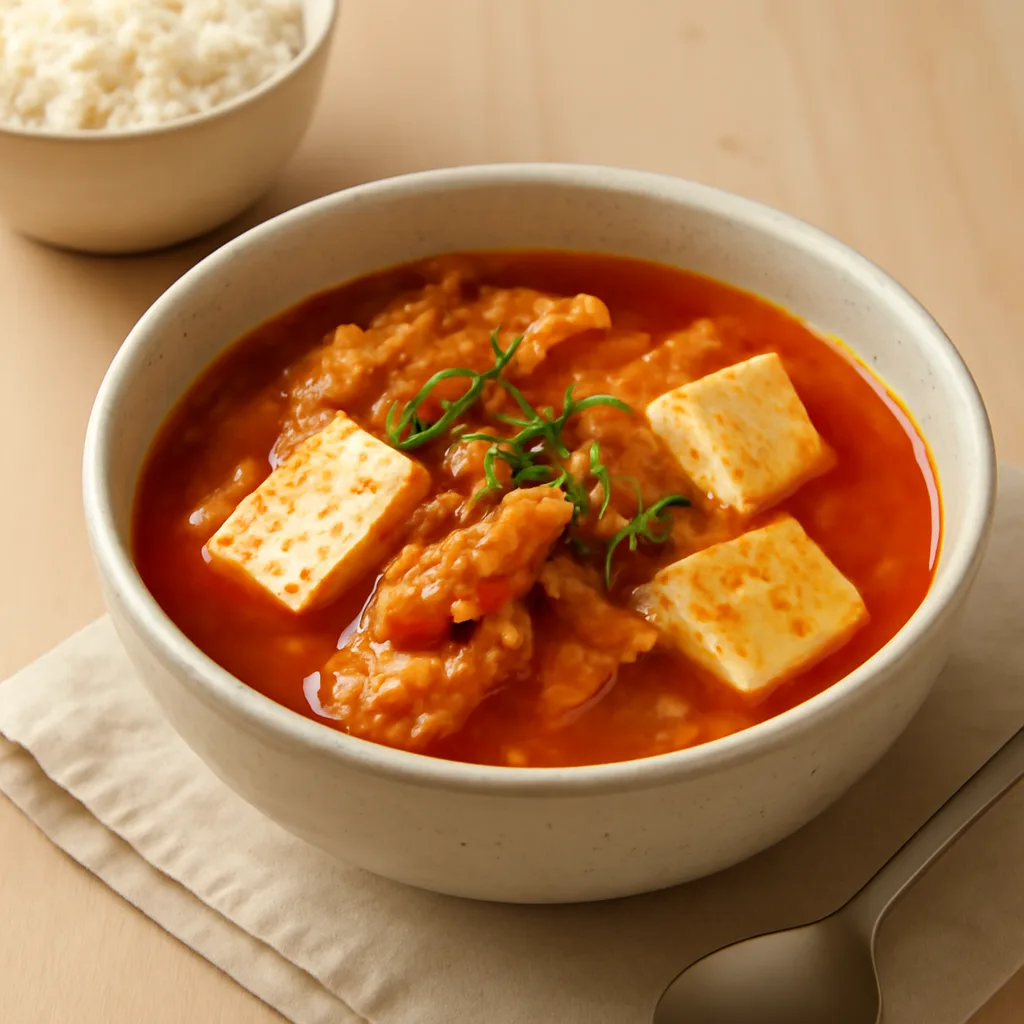
عن هذا الطعام
Kimchi-tofu-guk is a simple soup dish that balances the sourness and savoriness of well-aged kimchi in the broth and adds soft tofu for a concise soup. When scallions and onions are added, the kimchi’s strong aroma becomes more rounded, creating a slightly spicy yet refreshing impression. Because the representative ingredients are simple, the flavor is greatly influenced by how ripe the kimchi is and when the tofu is added. If you use kimchi with pronounced sourness, the broth will be cool; if you use kimchi that isn’t fully ripe, the acidity may be mild but a grassy aroma can remain, so it’s best to simmer enough to settle the aroma. Since the provided information doesn’t include detailed measurements or steps, it’s safe to adjust seasoning at the end while checking the saltiness of the kimchi’s saltiness and the amount of broth. It’s a low-difficulty home-cooked soup that can be prepared in about 20 minutes and is convenient to serve with rice.
الطعم والملمس
The broth centers on the salty savoriness and refreshing acidity from the kimchi, with onions and scallions adding a sweet aroma. The level of heat depends on the amount of seasoned kimchi and whether additional seasonings are used. The tofu has a moist texture that absorbs the broth’s stimulus gently. If boiled too long at high heat, the edges of the tofu may become rough or break easily, so to preserve shape it’s better not to boil it too vigorously.
المفتاح لجعلها لذيذة
- If the kimchi’s acidity feels strong, first simmer the broth enough to soften the sharp scent of acidity, and if it’s still刺激, dilute the richness with a little water or stock.
- If onions are cut too thick, they may not release enough sweetness in the short cooking time, so slice them thin enough for the broth to cook quickly and support the kimchi’s saltiness.
- Tofu should be added after the broth has already some flavor, to reduce having a strong taste only on the surface; after adding, avoid vigorous stirring with a spoon and gently shake the pot.
- Scallions may lose their bright aroma if boiled for too long, so add them at the end to preserve aroma. Conversely, if the onion aroma feels too strong, add them a little earlier to cook with the broth.
الأخطاء الشائعة
- If you season strongly from the start without checking the kimchi’s salinity, the broth may reduce and become too salty; wait until the kimchi has fully permeated and then taste and adjust.
- After adding the tofu, if you keep it at a rolling boil and stir vigorously, pieces may break and the broth can look cloudy; simmer on medium heat and only move gently if needed.
- If undercooked kimchi is boiled briefly, a greenish odor and rough acidity may remain, so it’s better to simmer until the kimchi is tender and its aroma blends into the broth.
- If you boil both onions and scallions for a long time from the start and the aroma hardly comes through, next time leave some scallions aside to add at the end to create aroma layers.
أفكار تطبيقية
- If you want to emphasize the kimchi’s presence, cut it relatively large and avoid adding too much kimchi to prevent the broth from becoming too thick.
- To highlight the tofu’s soft contrast, choose large dice and don’t cut into too small pieces so that a single spoonful includes kimchi and tofu together.
- If you need more onion sweetness, you can increase the onion proportion, but if you want the kimchi’s cool acidity to stand out, avoid adding too many onions.
- If you want to soften the spicy impression, reduce the amount of kimchi with strong seasoning and adjust the broth. In this case, the kimchi’s flavor may also fade.
أفكار للتقديم
- When served with warm rice, the broth’s saltiness and acidity blend with the rice for a good one-bowl meal.
- To prevent tofu from breaking, when transferring to individual bowls, scoop from the pot with a deep ladle so that tofu and broth are served together.
- If you want to preserve the scallion aroma, place the remaining scallions on top just after plating so they warm slightly from the hot broth.
- If kimchi’s spiciness or acidity is strong, it’s better to pair it simply with rice rather than adding many side dishes, to easily judge the broth’s flavor.