قاموس المكونات
تحقق من خصائص المكونات وكيفية استخدامها في الطهي.
كعك الأرز
2
2
Tteok is a food made by kneading or steaming grains such as rice flour or glutinous rice flour. Depending on the type, it can be used as a staple or added to soups, stir-fries, and desserts. For cooking, common varieties include elongated tteokbokki tteok, thin slices of tteokguk tteok, and bite-sized tteok. Even the same tteok can yield very different results depending on whether it is made from rice flour or glutinous rice flour and its moisture state. Neutral-tasting tteok serves as a base to absorb the flavors of seasoning and broth, and goes well with strong sauces like gochujang-tteokbokki. On the other hand, tteok with sweetness or fillings can muddy the flavor if added to savory dishes, so it’s best to check packaging and taste first. Tteok tends to harden when cold or firm, but can become soft again with adequate moisture and temperature. However, if boiled for too long or stirred over high heat, the outside can loosen and stick together, so after achieving the desired chewiness, finish cooking in a shorter time.
الطعم والملمس
Plain rice tteok has a gentle grain aroma and a sturdy, mild flavor that lets the seasoning itself come through clearly. A higher glutinous rice ratio yields a more elastic and chewy bite, while millet rice tteok is relatively hard and cleanly cut. When reheated, tteok is soft and chewy, but if heated with insufficient moisture, the center can feel hard while the surface seems soft. In broth, it softens but retains its resilience, and when pan-fried or stir-fried, the surface develops a roasted aroma and a chewy crust.
طرق الاستخدام الرئيسية
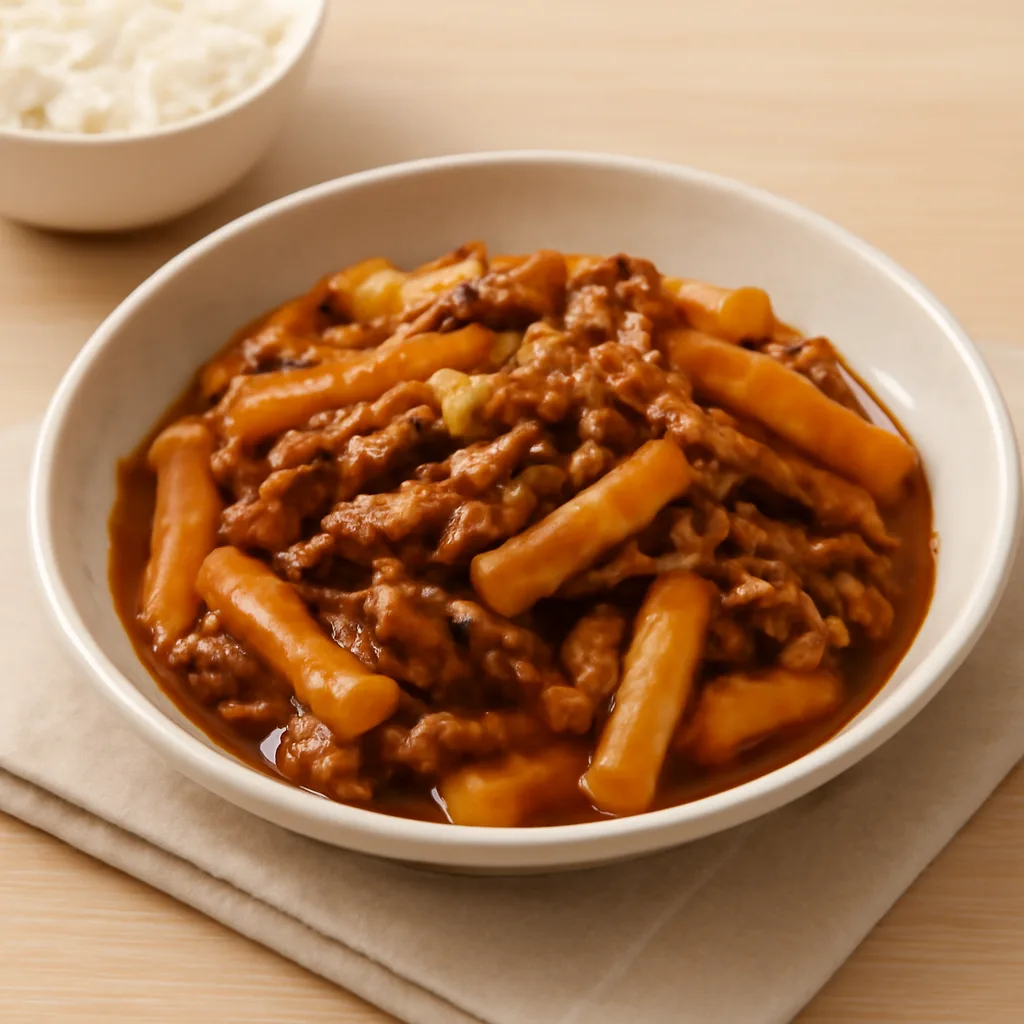
- For tteokbokki, cut cylindrical rice cake (garaetteok) and simmer with gochujang sauce, soy sauce sauce, or cream sauce. Before the sauce reduces too much, check if the tteok is tender; if still firm, add a little water or stock to continue cooking.
- For tteokguk and manduguk, add thinly sliced tteok and briefly cook with the heat of the broth. When the tteok floats and the edges become soft, it is generally ready to eat, so avoid boiling too long to prevent overly thick broth.
- Lightly oil a pan and toast the tteok, then coat with soy sauce, honey, corn syrup, or a spicy sauce to make a snack or accompaniment. When using sweeter tteok, reduce sugar or syrup in the seasoning to avoid overpowering flavor.
- You can add tteok to dishes with marinade and broth such as bulgogi, dakgalbi, or jeongol. However, tteok absorbs seasoning and moisture, so adding too much from the start can leave meat or vegetables undersalted.
نصائح التحضير
- If refrigerated or frozen tteok are sticking together, rather than forcing them apart, soak briefly in cold or lukewarm water to loosen the surface. Once the surface feels slippery and flexible, separate and pat dry before use.
- Firmly hardened tteok should be soaked in water before cooking to help soften evenly throughout. Very soft fresh tteok should only be rinsed lightly.
- When adding tteok to a sauce with high viscosity like tteokbokki, the tteok quickly absorbs sauce and can scorch on the bottom. If the sauce becomes too thick, gradually add water or stock and gently push the bottom with a wide spatula as it cooks.
- When pan-frying tteok, dry surface moisture to reduce splattering and help browning. If cooked over high heat and flipped too quickly, the outside may brown while the inside remains hard; cook slowly over medium-low heat to warm all sides.
خصائص عند الطهي
- Tteok absorbs moisture as it heats and starch becomes soft, creating resilience. In boiling broth, the edges soften first and when pressed in the center, if there is no hard core, it is time to finish with the next ingredients.
- If left in broth or sauce for a long time, some starch may loosen and the liquid may become cloudy and thick. To keep a clear broth, add tteok near the end and simmer briefly.
- In stir-frying, the drier the surface, the more the tteok will contact the pan and develop roasted aroma, but if it gets too dry it may stick or crack. If the pan looks dry or the tteok becomes stiff, add a small amount of water to loosen with steam, then stir-fry.
- Acidic ingredients or strong seasonings do not instantly soften tteok; more important are sufficient moisture and heat. In very strongly seasoned dishes, the tteok can become overly seasoned before it’s fully cooked, so adjust with water or stock to control thickness as it cooks.
تركيبات مناسبة
- Bold seasonings like gochujang, chili powder, soy sauce, garlic, and sesame oil form the flavor center for neutral tteok. With spicy seasonings, pair with vegetables that add moisture and sweetness such as cabbage, scallions, and onions to balance the flavors.
- In clear beef or anchovy-based broths, thin tteok fits well, and adding sesame seeds, egg, or green onion helps maintain a mild taste. If the broth is already salty, the tteok will absorb some salt and the broth won’t become too watery, so it’s better to start with a light seasoning.
- For pan-fried tteok, use a salty combination like soy sauce and sesame oil, or a sweet combination like honey or corn syrup with nuts. Using both directions strongly at once can overwhelm the tteok’s mildness, so choose one flavor axis.
نقاط يجب مراعاتها عند الاستبدال
- If there is no rice tteok for tteokbokki, cut garaetteok into similar lengths and use it; for tteokguk, use thinner slices and shorten cooking time. If made too thin, they can easily fall apart, so add near the end when the sauce is almost ready.
- For dishes requiring chewy texture, udon noodles or potato tteok can be used as substitutes, but absorption of seasoning and cooking speed differ, so results won’t be exactly the same. Udon softens faster, and potato tteok can become starchier, so adjust sauce thickness and cooking time accordingly.
- In broth-based dishes, hand-cut dough soup noodles or kalguksu can be alternatives, but they won’t replicate the tteok’s elasticity and mild chew. If the desired texture relies on the tteok’s distinct feel, it’s better to swap only the type of tteok rather than replacing it entirely.
- Sweet dessert tteok is often not a good substitute for regular cooking tteok. If you taste a piece and detect sweetness, reserve it for separate snack preparations rather than using it in savory or spicy dishes.
المكونات التي تستخدم غالبًا مع الأطعمة الفعلية
يتم تجميعها بناءً على عدد مرات ظهور المكونات الرئيسية للأطعمة العامة المسجلة في CookPagoda.
الأطعمة التي تحتوي على هذه المكونات
نقدم لك الأطعمة التي تحتوي على هذه المكونات كمواد رئيسية مرتبة حسب عدد المشاهدات.