View recipes
Check the reference data for the selected food.
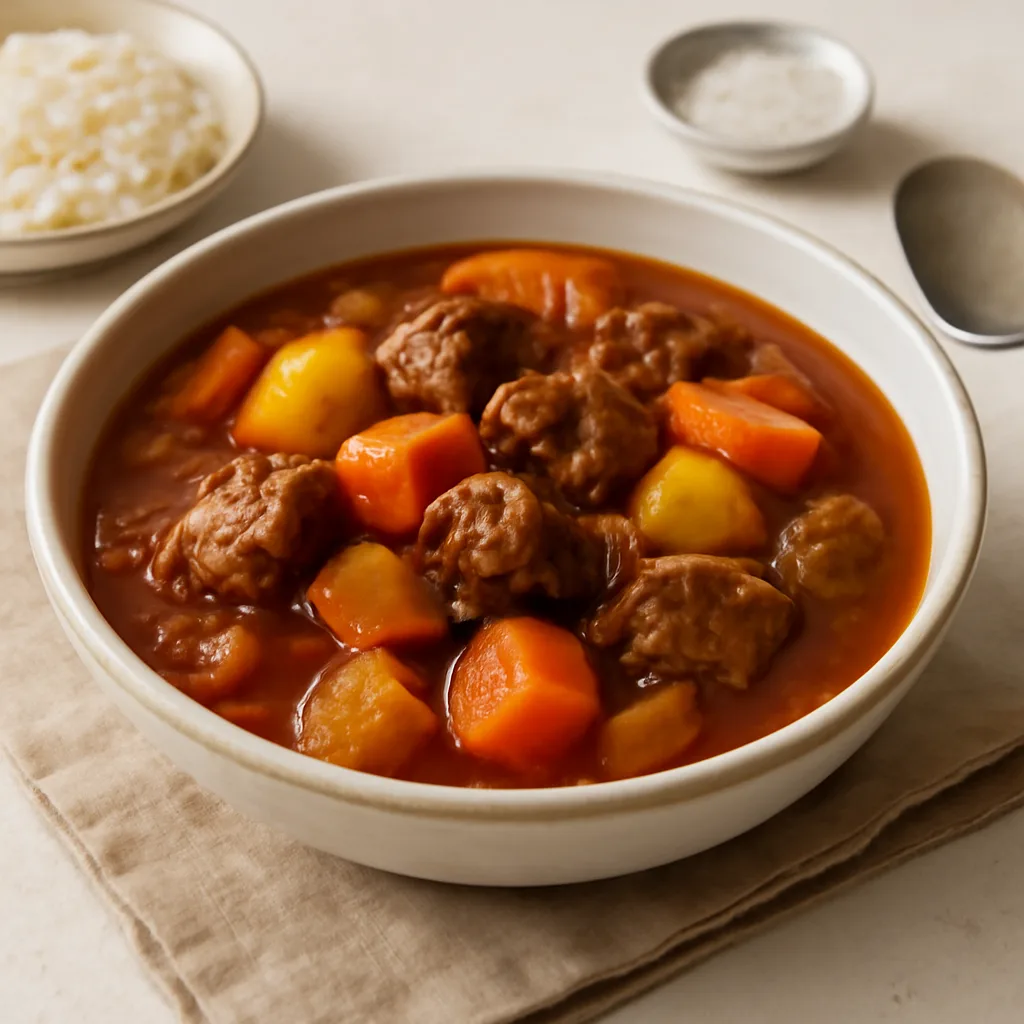
Beef Stew
Beef stew is a dish characterized by a deep, rich flavor, with tender beef and a variety of vegetables coming together to create a robust taste. It is simmered for a long time to develop depth of flavor and is served warm, making it a comforting meal to share with family.
Related Themes
9
View0
Like2
AI recommendations0
CreatedAbout this recipe
Beef stew is a warm Western-style dish where beef is simmered with potatoes, carrots, onions, and celery long enough for the flavors to meld into the broth. With a cooking time of about 70 minutes, it’s better to monitor the pot until the meat is tender and the vegetables naturally soften into the broth rather than finishing quickly on high heat. You can cook in a single pot, but rather than aiming to cook everything at once to the same size, it’s important to manage the pace at which the meat and tougher vegetables cook. In particular, if potatoes are added too early, their edges can fall apart, making the broth cloudy and thick. If you want a clear, chunky stew, adjust when you add them by checking their shape. Aside from the basic ingredients, there is no fixed guidance on additional spices, tomato components, or whether to use stock. Therefore, even if you want a stronger flavor, it’s safer to first taste the beef and vegetables and then season gradually rather than adding a lot of extra ingredients arbitrarily.
Taste and Texture
Long-simmered beef fibers become tender and the onions and celery add a gentle sweetness and aroma to the broth. Potatoes and carrots contribute a cozy texture, making the dish feel hearty as a one-bowl meal despite being a broth-based dish. The thickness of the broth depends on how much the potatoes break down and how much water evaporates. For a clearer, chunkier broth, cook briefly; for a softer, thicker texture, cook until some potatoes break down.
Key to making it delicious
- Check if the beef remains tough after simmering by cutting a piece; if the fibers do not break easily, add a little water or stock and maintain a gentle simmer.
- Cut potatoes and carrots into roughly equal sizes; if the potato is of a variety that breaks easily or is small, add it after the carrots to keep its shape.
- If the broth boils strongly and the solids keep shaking, the potato surface may split and the meat become rough, so keep the heat at a level where bubbles rise gently on the surface.
- If the onion and celery aromas feel too strong, judge based on the broth flavor in the later stages rather than just early on; as you simmer longer, vegetable aromas typically blend to a softer note.
- Season at the end once the broth has reduced to some extent. If seasoned heavily at the start, the reduced liquid will taste too salty later.
Common mistakes
- If the meat finishes cooking while still tough, it will lack the tenderness typical of long-simmered stews. If the meat chunks are large, give it more time, and if the broth is running low, add a little water so the bottom doesn’t dry out.
- Starting with high heat will reduce the broth quickly and may cause the edges of ingredients to stick. If you smell a burnt scent at the bottom, lower the heat immediately and gently stir to check the state.
- If potatoes are cut too small or added too early, they can disintegrate in the broth and the solids may lose their distinct texture. For chunky potatoes, cut larger and reduce stirring to preserve texture.
- Seasoning too early can prevent the vegetables and broth from concentrating, making the final dish taste too salty. Keep seasoning lightly during cooking and taste once more at the end to adjust.
Application Ideas
- If you want a lighter broth and to preserve vegetable shape, don’t overcook the potatoes; focus on the doneness of the meat and then adjust the potatoes and carrots near the end.
- If you want a thicker texture, you can slightly mash some fully cooked potatoes along the edge of the pot and mix into the broth. This is not suitable if you want a clear broth with distinct chunks.
- If you don’t like celery aroma, reduce its amount and increase the onion and carrot proportions, but the flavor balance of the basic ingredients can vary, so adjust by tasting the broth during cooking.
- If you cut beef into smaller pieces, it will be easier to eat, but it may break apart if simmered long; if you want more texture in the solids, avoid cutting into pieces that are too small.
Pairing ideas
- When finished, serve the stew hot in a deep bowl so beef, potatoes, and carrots are visible and the broth with solids can be enjoyed together.
- Pair with bread for dipping the leftover broth, or serve with rice for a soup-stew meal.
- If the broth feels too thin right after cooking, uncover and simmer a little longer to adjust the thickness, then serve. Conversely, if it’s too thick, gradually stir in hot water to reach the desired consistency.