View recipes
Check the reference data for the selected food.
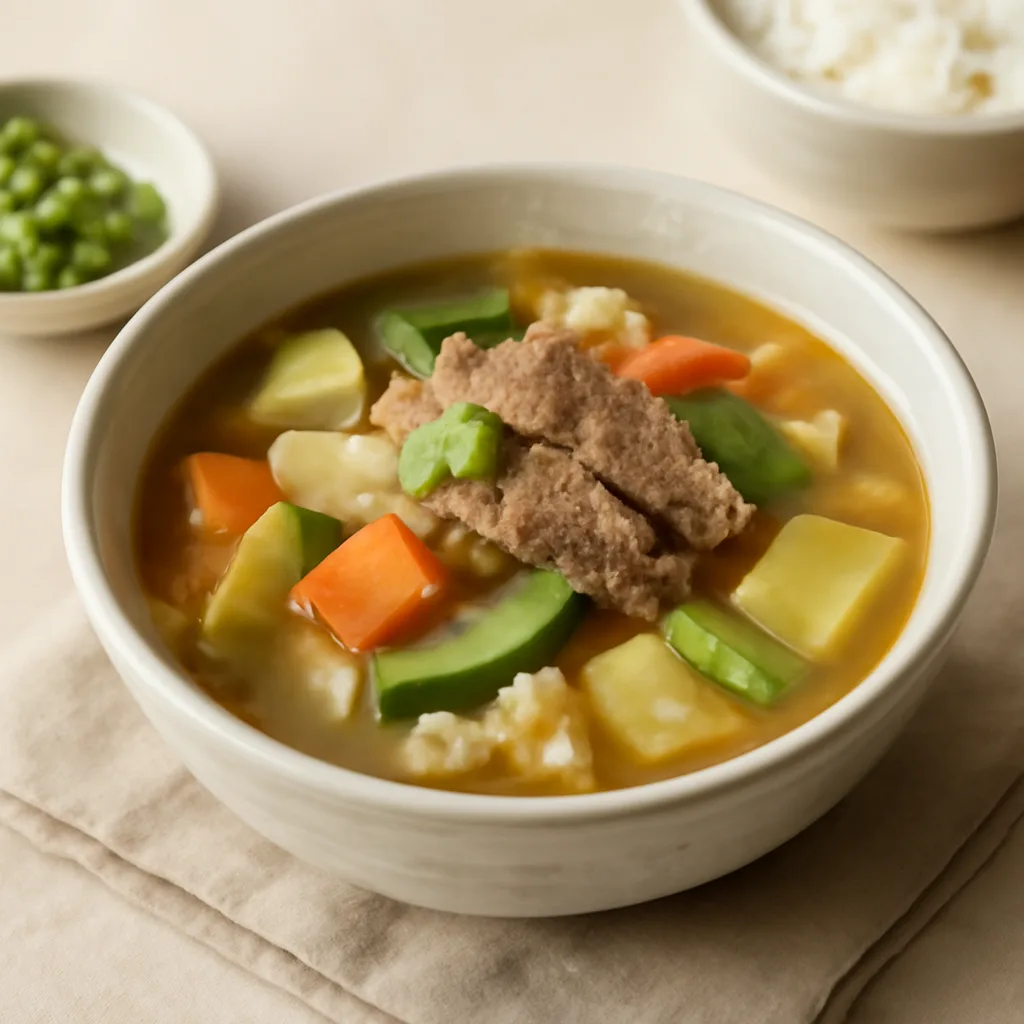
Beef and Vegetable Soup
Beef and Vegetable Soup is a warm dish that blends a variety of vegetables with beef to create a deep, comforting flavor. Tender beef and crisp vegetables harmonize, and the broth is exceptionally flavorful.
Related Themes
11
View0
Like1
AI recommendations0
CreatedAbout this recipe
Beef and vegetable soup is a warm broth dish where beef, potatoes, carrots, onions, and celery are simmered in one pot to infuse the ingredients’ flavors into the stock. The roughly 50-minute cooking time may include steps to tenderize the beef fibers and sufficiently cook the firm root vegetables, so matching the size of the ingredients to their cooking speed is important. Potatoes and carrots add a cozy texture and subtle sweetness to the broth, while onions and celery form the aromatic base. Depending on the cut of beef and the desired thickness of the broth, results can vary; for a clear, light stock, keep the vegetables whole; for a heartier feel, cook the potatoes enough to release some starch into the liquid and thicken the broth slightly. The level of difficulty is moderate. You only need one pot, but you should observe the timing to avoid tough beef and to prevent vegetables from becoming too soft, including the order in which you add ingredients.
Taste and Texture
A broth centered on the savory, rich beef flavor, with the sweetness of onions, the fresh aroma of celery, and the soft flavors of carrots and potatoes layered together. The longer you simmer, the more rounded the vegetable aroma becomes, but the distinct scent of celery and the crisp texture of vegetables diminish. When well cooked, beef fibers are tender to chew, and potatoes and carrots can be easily broken with a spoon while still retaining their shape. If the potatoes break apart too much, the broth may become slightly opaque and thick, which may not be ideal if you prefer a clear stock.
Key to making it delicious
- Slice beef relatively evenly in the direction opposite to its grain so that even after a longer simmer the chew remains less tough, and if pieces vary in size, small pieces may overcook first so standardize the size.
- Cut potatoes and carrots to about the same size as the beef; if potatoes tend to break apart too quickly, cut them a bit larger next time or add them later to maintain their shape.
- Onions and celery form the broth’s aroma, so simmering for a long time from the start allows flavors to blend more softly, but if you want the celery’s distinct aroma, adding some later in the cooking is more appropriate.
- After the broth comes to a boil, keeping a gentle simmer rather than a vigorous boil helps prevent ingredients from breaking up too much.
- Use potatoes as a doneness test by pressing to see if they split easily to the center and if the firm texture of the carrots is no longer felt; if the beef isn’t tender yet, you can remove the vegetables first and continue simmering only the beef to finish.
Common mistakes
- Starting with high heat and keeping it roaring can make the broth cloudy and cause potatoes to crumble from the edges; lower the heat after it boils and maintain a gentle simmer, reducing stirring for the remaining cooking time.
- Cutting potatoes and carrots too small can cause chunks to disintegrate in the broth, so next time cut them a bit larger than bite-size and check their doneness in the middle.
- If the beef isn’t tender enough and seems chewy, rather than simmering the vegetables for a long time, remove them when they are properly cooked and simmer the beef and broth longer to achieve a smoother texture.
- If celery is cooked for too long and its aroma becomes heavy or dominant, reduce the amount or add part of it at the end to adjust the aroma intensity.
Application Ideas
- If you simmer the potatoes a bit longer so that some edges naturally fall apart, you can achieve a cozier texture without needing extra thickening ingredients, but this is not ideal for a clear broth.
- If you don’t care for celery aroma, reduce it and keep the proportion of onions and carrots; in this case the broth will become sweeter and milder.
- Cooking the beef and vegetables all in large chunks makes a hearty, chunk-driven stew-like dish; cutting them smaller makes it easier to eat with a spoon, but the vegetables may break down faster.
- If you want a clearer broth, turn off the heat just before the potatoes break apart and, if you want a slightly thicker texture, lightly mash some of the cooked potatoes in the broth to adjust.
Pairing ideas
- When hot, ladle into deep bowls so beef, potatoes, and carrots are evenly visible and enjoy the broth and solids together. Pairs nicely with plain bread or rice to naturally finish the remaining broth, and if potatoes are already well included, you can lightly adjust portions of side dishes to balance. If you want to enhance the celery aroma, finely chop celery and sprinkle a small amount on top, and for those sensitive to aroma, offer the broth with a mild celery-free version. If the broth has thickened, serve in a wide bowl like a stew; if clear, present generously as a broth-based dish to emphasize warmth.