View recipes
Check the reference data for the selected food.
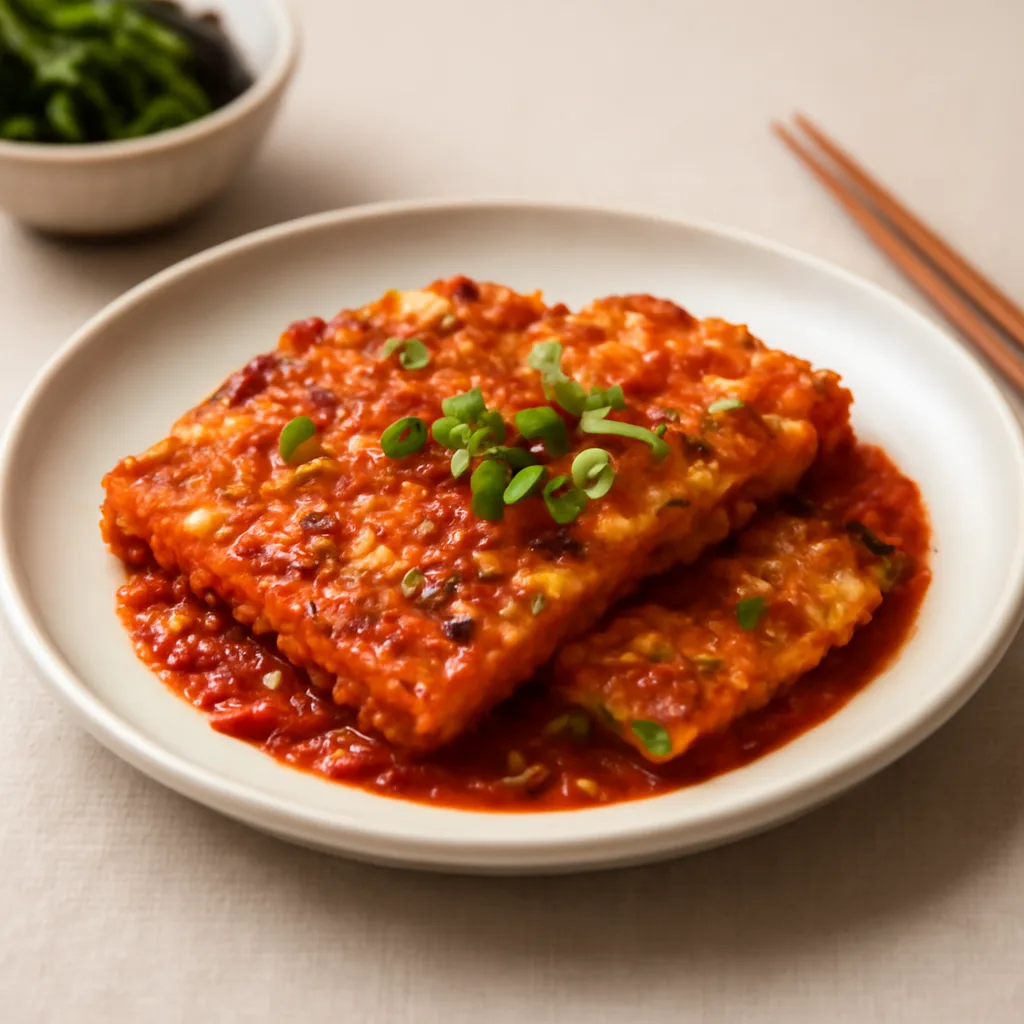
Spicy Tofu Steak
Spicy tofu steak features soft tofu deeply infused with a spicy glaze, making it a great pairing for alcoholic beverages. The savory and spicy flavors balance each other, offering a rich taste with low calories.
Main Ingredients
Related Themes
16
View0
Like1
AI recommendations0
CreatedAbout this recipe
Spicy tofu steak is an anju (snack) dish where you first sear 1 cm thick sliced tofu until golden, then finish with a glaze made from gochujang, soy sauce, minced garlic, and sugar. The tofu’s mildness balances the savory and spicy sauce, making the flavor stand out even with few ingredients. The key is to dry the surface of the tofu well before frying. When a light brown crust forms on the surface, you should add the sauce so the tofu won’t crumble and the sauce won’t become too watery in the pan. Total cooking time is about 20 minutes, and since you flip the tofu and reduce the sauce, the dish is of medium difficulty. Even with the recorded components it has some heat, but if you want a stronger kick you can add optional chili powder. However, increasing chili powder may let the spiciness overpower the sweetness of the gochujang and the garlic aroma, so if you want a smooth and balanced taste it’s best to use it as a finishing sprinkle rather than increasing it in the sauce.
Taste and Texture
The outside is toasty and slightly firm from frying, while the inside stays moist and soft. The umami of gochujang and soy sauce, with garlic aroma and the gentle sweetness of sugar, complement the spicy-salty sauce against the tofu’s mildness. After applying the glaze, the surface becomes glossy as it braises, and the edges may brown slightly and stick a little. If the sauce is heated for too long, the sweetness can become too strong or a bitter aroma can appear, so it’s best to finish with a thin coating of sauce on the tofu.
Key to making it delicious
- Drain surface moisture of the tofu by pressing it with a paper towel after cutting so less oil splatters when frying and a nice golden crust forms.
- Preheat the pan to medium heat and don’t move the tofu much for the first 3–4 minutes. If you nudge it before the bottom sets, the tofu may crack, but once the edges show a pale brown color, it’s easier to flip.
- Mix the sauce ingredients (gochujang, soy sauce, minced garlic, sugar) in advance until evenly combined to prevent uneven salting or sweetness.
- After both sides are well fried, apply the glaze and heat briefly. The sauce concentrates quickly in the pan, so if the pan is too hot, lower the heat to medium-low for safety.
- Spring onions and chili powder add color and aroma at the end. If chili powder touches the pan directly it can burn easily, so as a garnish it’s better to place on the plate before sprinkling.
Common mistakes
- If the tofu tears or crumbles in the pan, moisture wasn’t sufficiently removed or it was flipped too early. Let the other side detach naturally from the pan, then flip with a wide spatula in one motion.
- If the sauce sticks and tastes bitter, the heating time after glazing was too long or the heat was too high. When the sauce reduces to a glossy glaze, turn off the heat immediately; if the pan is overheated, lower the heat slightly and add more sauce.
- If the final seasoning tastes too salty, the soy sauce and gochujang may be concentrated. Next time don’t apply the sauce thickly all at once; apply only part first and taste, then add more if needed.
- If you expect the sauce to penetrate deeply into the tofu, the surface-only glaze may feel lacking. This recipe emphasizes the contrast between a seasoned outer layer and a bland interior, so when you want a stronger flavor, apply a thinner layer of glaze and cook a little longer.
Application Ideas
- If you want more heat, mix 1 teaspoon of chili powder into the sauce or sprinkle it after finishing, but if you prefer the gochujang flavor you can omit the chili powder.
- If the sweetness feels heavy, reduce the sugar to make the gochujang and garlic flavors more pronounced. In this case the outer color may be less deeply glazed, so finish by judging gloss on the surface rather than the total time of simmering.
- For a crisper surface, increase frying time slightly to expand the brown areas on both sides, then apply the glaze. But if you fry too long, moisture inside will decrease, so this is not ideal for a soft texture.
- Adding plenty of spring onions enhances a fresh aroma among the spicy glaze. If the sharp taste of onion is too strong, slice very thinly and use only a small amount.
Pairing ideas
- Serve while warm to best enjoy the contrast between the nutty fried surface and the moist interior.
- Pair with rice to enjoy any remaining sauce, or cut into bite-sized pieces for easy pickup as an hors d’oeuvre when serving with alcohol.
- Finish with spring onions and chili powder for color, but if you need to limit spiciness, place the chili powder on the side so each person can add as desired.
Essential ingredients
두부
고추장
간장
다진 마늘
설탕
Optional ingredients
고춧가루
매운맛을 추가하기 위해 사용
Cooking order
두부를 1cm 두께로 썰고, 물기를 제거한 후 소금과 후추로 간을 한다.
팬에 식용유를 두르고 중불로 예열한다.
두부를 팬에 올리고 각 면을 3-4분씩 노릇하게 구워준다.
고추장 1큰술, 간장 1큰술, 다진 마늘 1작은술, 설탕 1작은술을 섞어 양념장을 만든다.
구운 두부에 양념장을 발라 2분간 더 구워 양념이 잘 스며들도록 한다.
완성된 두부 스테이크를 접시에 담고, 고춧가루와 대파를 뿌려 장식한다.