View recipes
Check the reference data for the selected food.
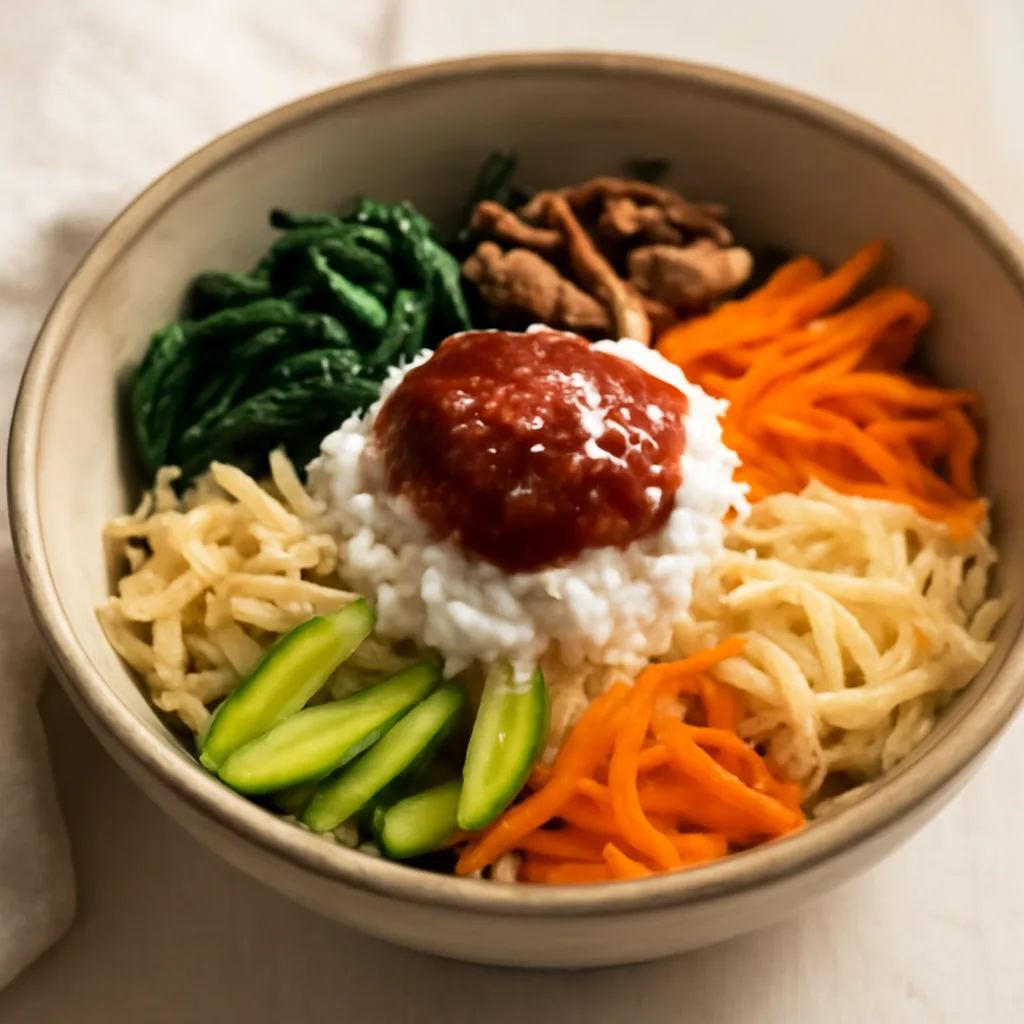
Bibimbap
Bibimbap is a representative Korean single-meal dish that combines various namuls (seasoned vegetables), vegetables, meat, and eggs. When mixed with gochujang (red chili paste) and sesame oil, it is savory and delicious.
Related Themes
19
View2
Like1
AI recommendations0
CreatedAbout this recipe
Bibimbap is a one-bowl dish where warm rice is topped with sautéed namul (seasoned vegetables) and vegetables, with a soft-boiled egg, then mixed with gochujang (Korean chili paste) and sesame oil. In this preparation, sautéing greens like spinach or bracken separately to bring out each ingredient’s aroma and texture is key. Preparation takes about 30 minutes, and because many ingredients must be trimmed and seasoned separately, the skill level is intermediate. The flavor center is the spicy-sweet umami of gochujang and the nutty aroma of sesame oil, and when the yolk is mixed in, the bold seasoning becomes smoother. The rice should be kept warm so gochujang blends evenly and the ingredients harmonize naturally. The amount of gochujang and salt varies depending on the types and moisture of the namul. Rather than adding all the seasoning at the start, divide the gochujang while mixing and adjust by taste to avoid overpowering the namul’s inherent saltiness and aroma.
Taste and Texture
Warm, soft rice with moist namul and a gently set yolk creates a soft, savory texture. If the namul isn’t fried too long, each ingredient retains a distinct bite and aroma, offering variation with each mouthful. Gochujang adds depth of spiciness and saltiness, and sesame oil ties the aroma at the end. If you add a lot of gochujang, the flavor becomes vivid but the delicate aroma of the namul may be overwhelmed, so starting with less is preferable for a milder taste.
Key to making it delicious
- Serve rice warm, just steaming, so the gochujang doesn’t clump and blends well; if you’ve cooked the rice ahead and it’s cooled, reheat it enough before use.
- Namuls with different characteristics, like spinach and bracken, should be sautéed separately rather than all in one pan to easier control moisture and doneness.
- When the namul releases a lot of moisture in the pan, fry on high heat briefly to evaporate moisture; already-soft namul should not be heated long to prevent toughness.
- Turn off heat when the egg whites are set and the yolk is still runny; when mixed this way, the yolk spreads like a sauce, but if you prefer fully cooked yolks or want to avoid using yolk, cook to your desired doneness.
- Divide gochujang and sesame oil over the rice and toppings and mix to taste, which helps balance with the namul’s salty seasoning.
Common mistakes
- Frying too much namul at once can cause moisture to accumulate in the pan, making it feel boiled or soggy; divide portions or heat the pan well before short bursts of cooking.
- Adding the same amount of salt to all namuls can make already-salted ingredients too salty, so add small amounts per ingredient and check overall flavor before mixing.
- Using cold rice can prevent gochujang and sesame oil from mixing evenly, causing clumps; warm the rice or add seasonings in small portions.
- Adding the egg too early can let residual heat set the yolk, reducing the soft binding; place the egg after the other ingredients are arranged.
- Using too much sesame oil can mute the gochujang and namul aromas, so start with the recorded 1 tablespoon and adjust to suit the rice amount and taste.
Application Ideas
- Adjust the ratio of spinach and bracken to emphasize the preferred namul aroma; if adding high-moisture vegetables, remove excess moisture to prevent the rice from getting soggy.
- If you want less heat, use less gochujang and first mix with sesame oil and the egg yolk, then supplement the missing salt as needed.
- For a more pronounced gochujang flavor, instead of mixing it all into the rice at once, place it on one side and mix gradually to control the seasoning concentration.
- If the moistness of the soft yolk doesn’t suit you, cook the egg to a fully cooked yolk and use it; do not skip sesame oil when mixing, to maintain a rich, nutty sheen.
Pairing ideas
- Put the rice in a wide bowl first, then arrange the namul around it to showcase the colors and varieties, making it easy to check the ingredients before mixing.
- Serve gochujang and sesame oil beside or in the center near the egg so the eater can adjust spiciness and nutty aroma to taste. When mixing immediately, lift the rice from bottom to top to avoid crushing the grains, helping namul retain shape and texture.
Essential ingredients
밥
따뜻한 밥 준비
나물
시금치, 고사리 등 다양한 나물 사용
계란
반숙으로 익히기
고추장
비빔용
소금
간 맞추기 위해 사용
Optional ingredients
참기름
마무리용으로 추가
Cooking order
밥을 준비하고 따뜻하게 유지합니다.
각종 나물과 야채를 깨끗이 씻어 준비합니다.
팬에 식용유를 두르고 나물을 각각 볶아 소금으로 간을 합니다.
계란을 프라이팬에 올려 반숙으로 익힙니다.
그릇에 밥을 담고 볶은 나물과 계란을 올립니다.
고추장과 참기름을 넣고 잘 비벼줍니다.
잘 비벼진 비빔밥을 그릇에 담아 제공합니다.