View recipes
Check the reference data for the selected food.
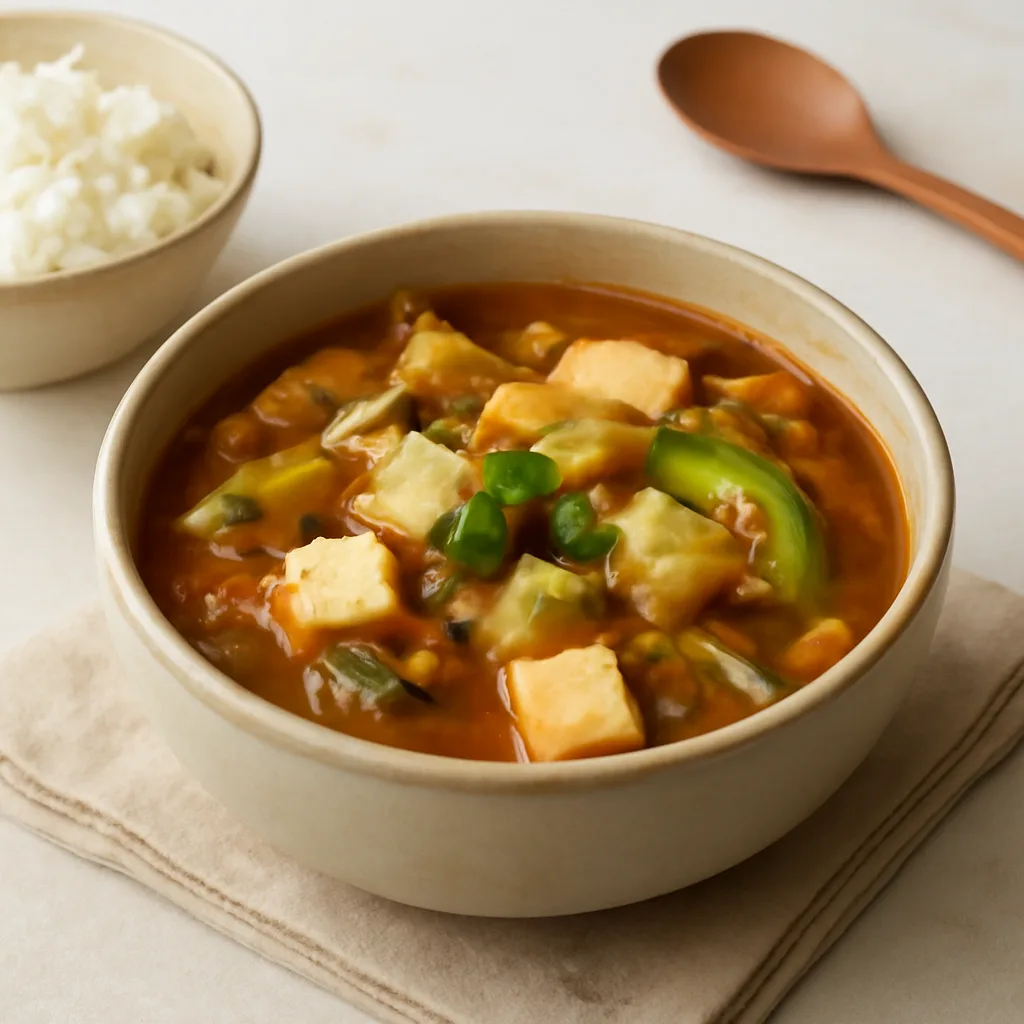
Doenjang jjigae
Doenjang jjigae is a traditional Korean stew characterized by a deep, rich flavor. Soft tofu and crisp napa cabbage provide a rich texture. It’s best enjoyed warm with rice as a comforting home meal.
Main Ingredients
5
View0
Like1
AI recommendations0
CreatedAbout this recipe
A doenjang jjigae (soybean paste stew) centered around napa cabbage, pork, soft tofu, and doenjang. The moisture and sweetness released as the cabbage cooks soften the savory depth of the soybean paste, and the pork adds a hearty savor to the broth. Because the ingredient list is simple, the level of saltiness in the doenjang and the doneness of the cabbage largely determine the dish’s finish. Add napa cabbage and tofu to water and whisk in the doenjang, simmering over medium heat. The cooking difficulty is relatively low. However, since there is no specified time to add the pork in the provided sequence, add it with the cabbage to ensure safe, even cooking and remove once fully cooked. Pork neck yields a milder broth, while pork belly suits a richer, oilier broth. Tofu can break easily if boiled for long periods, so add it after the broth has come to a boil and gently simmer; if the pot is boiling too hard, lower the heat. Just before finishing, taste the broth first and add a small amount of salt only if needed to prevent the doenjang’s saltiness from becoming overpowering.
Taste and Texture
The savory, salty base of doenjang with the soft natural sweetness of well-cooked cabbage, and the nutty richness of pork. Finish with a sprinkle of red pepper powder to add aroma and a sharp kick. When cabbage is fully cooked, it becomes tender to bite, and the tofu provides a smooth, delicate texture. If using pork belly, the surface of the broth may be a bit greasier, which suits those who prefer a richer flavor; for a lighter broth, pork neck is more suitable.
Key to making it delicious
- Rather than dropping doenjang in as a lump into boiling water, lift a small amount of broth first and dissolve the paste to prevent clumping and to distribute the saltiness evenly through the broth.
- Check that the stem portions of the cabbage soften first since they are firmer than the leaves; if still stiff, simmer a little longer over medium heat.
- Add pork with the cabbage so the color changes fully and the center cooks through; if the slices are thick, cut into bite-sized pieces to reduce uneven doneness.
- Tofu is delicate; after adding it, avoid vigorous stirring as it can crumble—gently swirl the pot or ladle broth over the tofu to mix.
- Maintain medium heat, but when foam and broth rise rapidly to the edges of the pot, reduce the heat. Vigorous boiling can cause the tofu to break and may cause the broth to overflow.
Common mistakes
- If the broth is too salty, it may be because more doenjang and salt were added after tasting; next time dissolve 1 tablespoon of doenjang first, simmer, and adjust remaining doenjang or salt incrementally at the end. If the cabbage remains tough, it may be too large or not simmered long enough; cut into evenly sized pieces and continue cooking until the stems bend softly.
- If the tofu crumbles, it could be from vigorous boiling or frequent low heat; add 1 cm pieces of tofu carefully and keep the simmer gentle.
- If the broth seems cloudy and greasy, the pork fat may have melted into the broth; for a lighter taste, use pork neck or skim off the surface oil as needed during simmering.
- If you see undercooked pink spots in the pork, do not serve immediately; separate the meat to check and simmer until fully cooked.
Application Ideas
- If you want more heat, sprinkle chili powder as shown in the finishing step, but omit it if you want to relish the aroma of doenjang more clearly. For a lighter broth, choose pork neck; for a richer, more flavorful result, use pork belly.
- If you want to retain some crispness in the cabbage, split the cabbage and add some at the beginning to simmer through and some toward the end just before serving. Note this will change the soft cabbage texture described in the main recipe.
- If you want tofu to stand out more, you can cut it slightly larger than 1 cm, but cutting too large may make it awkward to eat soup and tofu in one bite.
Pairing ideas
- Serve with rice while hot for a complete meal, pairing with the hearty broth. Add chili powder to individual bowls if desired to introduce a spicy note, while preserving the classic aroma of doenjang for those who want it. When plating, gently ladle under the ingredients from the bottom of the pot to ensure the cabbage and tofu donloat to the top; serve with broth evenly. Because the broth is very hot, use a large bowl and wait a moment before serving to avoid scalding.
Essential ingredients
Napa cabbage
Pork
Owned shoulder or belly can be used
Tofu
use soft tofu
Doenjang
Optional ingredients
No separate optional ingredients.
Cooking order
Cut the napa cabbage into bite-sized pieces, and dice the tofu into 1 cm cubes.
Pour water into a pot and bring to a boil.
Once the water boils, add the chopped napa cabbage and tofu.
Add one large spoonful of doenjang and stir well.
Simmer over medium heat for about 10 minutes until the cabbage is tender.
If the flavor is insufficient, adjust with a little salt to taste.
Serve the finished stew in bowls, and if desired, finish with a sprinkle of chili powder.