View recipes
Check the reference data for the selected food.
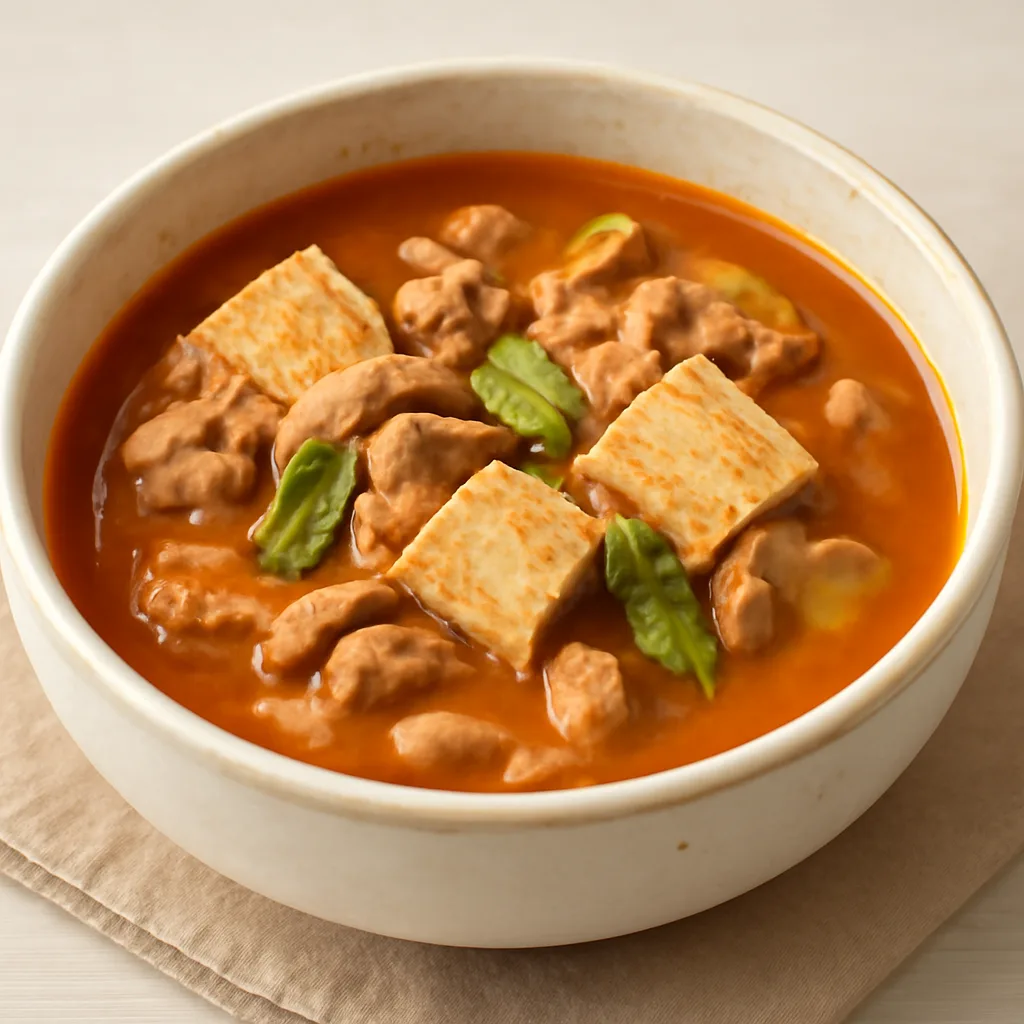
Pork Tofu Stew
Pork tofu stew is a delicious stew where savory pork pairs with soft tofu. It features a deep broth flavor and is a great dish to serve with rice.
Main Ingredients
Related Themes
6
View0
Like1
AI recommendations0
CreatedAbout this recipe
Pork and tofu stew is a stew that balances the fatty pork with the sweetness of napa cabbage and the hearty savor of doenjang (fermented soybean paste), finishing as a one‑pot soup with soft tofu. Using pork neck yields a relatively lean meaty flavor, while pork belly adds a richer, oilier note to the broth. The key to cooking is to boil the meat first to cook it through, then add tofu and napa cabbage to preserve shape and texture. Since the paste varies in salinity and aroma by product, use the recorded 2 tablespoons as a baseline, and taste at the end and adjust with a little salt if needed. It’s an easy stew that can be ready in about 30 minutes, but if you want a clear, light broth, pork neck is more suitable than pork belly. Conversely, if you want a nutty, rich broth, the fat from pork belly can be advantageous.
Taste and Texture
The savory saltiness of doenjang blends with the pork’s nutty aroma and the gentle sweetness of ripe napa cabbage. If you like, finish with red pepper powder for a sharp aroma. Tofu soaks up the broth and becomes soft and crumbly, while the cabbage becomes tender once fully cooked. When the meat is well boiled, it leaves a chewy texture without a raw meat feel.
Key to making it delicious
- Add the pork after the water has come to a full boil and simmer for about 5 minutes to ensure the center is evenly colored; if there are red or translucent areas, simmer a bit longer before adding the tofu.
- Instead of dropping the doenjang in as a lump into the broth, ladle a little broth and dissolve it, which reduces lumping and helps the flavor distribute more evenly.
- Cut the tofu into cubes and add with the napa cabbage; after adding, try not to vigorously stir with the ladle; if the tofu corners break, gently shake the pot to mix the broth.
- If the cabbage stalks are still firm and opaque, simmer on medium heat longer; if the leaves become too soft, reduce the heat or finish the cooking.
- Season to taste at the end; as it boils and moisture evaporates, the saltiness of the doenjang strengthens, so don’t add salt all at once—add gradually.
Common mistakes
- If you don’t skim the foam and fat off the surface right after adding the meat, the broth may taste cloudy and heavy; skim the surface foam with a spoon to keep the broth clear.
- Adding 2 tablespoons of doenjang and salt at the start can make the napa cabbage release water and become overly salty; season with the doenjang first and only adjust with salt at the end.
- Adding the tofu too early and boiling vigorously can cause pieces to break and make the broth look messy; keep the boil on medium and reduce the number of stirs.
- Turning off the heat as soon as the meat looks gray may leave the thickest pieces undercooked; check the thickest piece by cutting it open to ensure no red remains.
Application Ideas
- If you use pork belly instead of pork neck, the broth will be richer, but it may feel oilier, so choose pork neck for a lighter flavor if desired.
- Finish with a sprinkle of red pepper powder to brighten the aroma without overpowering the doenjang; if you don’t need spiciness, you can skip it.
- Separating the cabbage stalks and leaves and adding them separately helps since the sturdy stalks heat through first and the leaves don’t over-wilt.
- Cut the tofu into slightly larger pieces so they hold together better during simmering and provide a soft, creamy texture in the broth.
Pairing ideas
- Serve immediately with rice for a complete meal, pairing the soft tofu and doenjang broth together. Taste the broth first and then add red pepper powder to individual bowls if you want more heat. When the broth is rich and salty, enjoy with rice and lightly season additional side dishes to let the stew’s flavor shine.
Essential ingredients
Pork
Shoulder or pork belly can be used
Tofu
Use soft tofu
Napa cabbage
Doenjang
Optional ingredients
No separate optional ingredients.
Cooking order
Cut the pork into bite-sized pieces and cube the tofu.
Add water to a pot and bring to a boil.
When the water boils, add the pork and simmer for about 5 minutes.
Add the tofu and cabbage, then add one tablespoon of doenjang.
Simmer on medium heat for about 10 more minutes until the ingredients are cooked through.
If seasoning is lacking, adjust with salt to taste.
Serve the stew in bowls, and optionally finish with a sprinkle of red pepper powder.