View recipes
Check the reference data for the selected food.
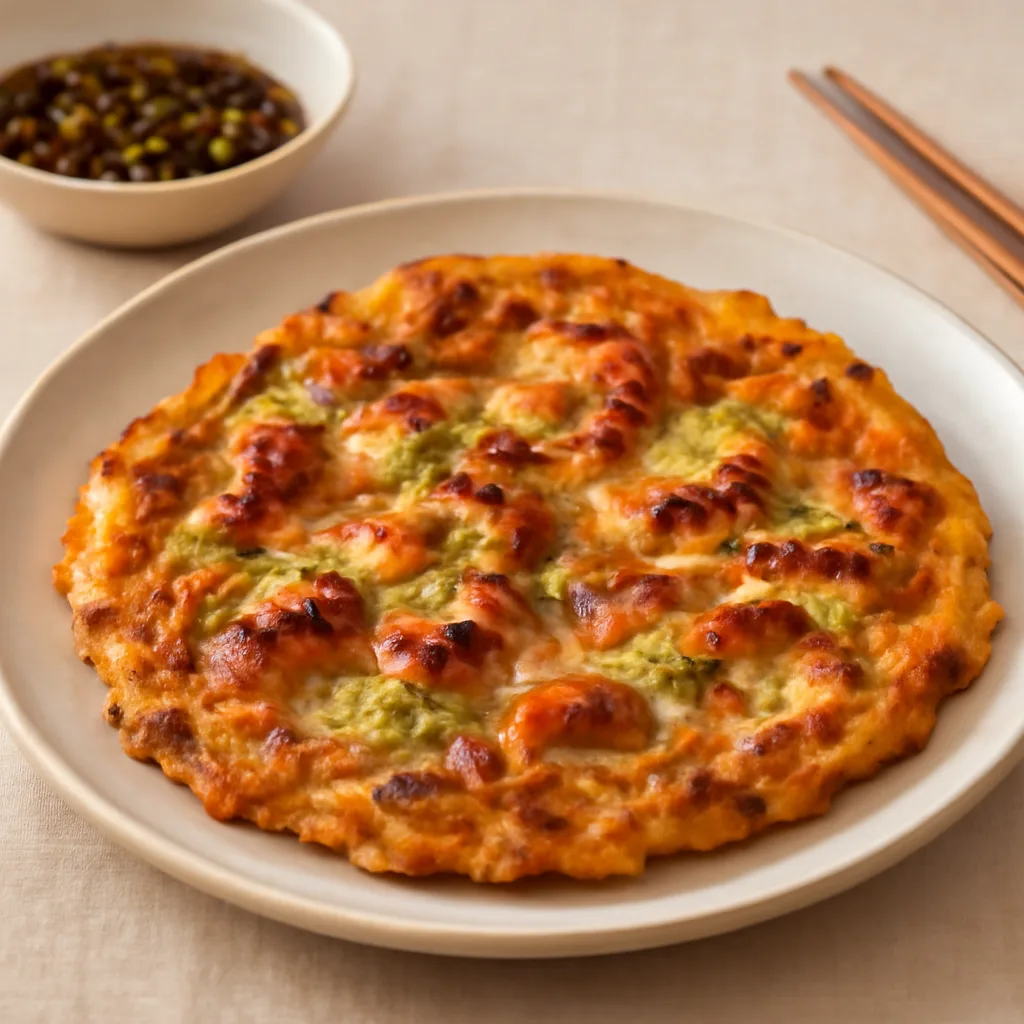
Nokji jeon
Nokji jeon is a dish characterized by its crispy and savory flavors. Fresh octopus with crunchy vegetables provides a rich texture, and it tastes even better with soy sauce.
Main Ingredients
6
View0
Like1
AI recommendations0
CreatedAbout this recipe
Nakji jeon is a seafood pancake made by lightly blanching octopus and mixing with mung bean sprouts, water parsley, and scallion before pan-frying. Since the octopus is blanched in advance for about 1 minute, you can reduce some moisture and overall cooking time compared to using fresh octopus, but drying the moisture thoroughly after blanching is key to achieving a crispy surface. The batter should bind the ingredients lightly with flour and egg. If there are many vegetables, adding too much flour can make the batter taste thicker than the octopus and water parsley, overwhelming their presence. Conversely, if the ingredients release water quickly and crumble when flipping, drain moisture once more by lightly shaking the ingredients and divide the batter into small portions to fry. In a frying pan, preheat to medium heat, then spread thinly and fry so the inside cooks and the outside turns golden. Since soy sauce is used as a dipping accompaniment, if you want to bring out the nutty flavor of the pancake and the aroma of water parsley, you can adjust how much you dip.
Taste and Texture
The edges are golden, savory, and crispy, while the center features the chewy texture of octopus wrapped in egg batter and the crunch of mung bean sprouts. Water parsley and scallion add a fresh aroma amid the seafood flavor. Overboiling the octopus or making the pancake too thick can reduce both chewiness and crispiness. Thin pancakes give a crispy texture, but when ingredients are large, turning them over can be difficult, so it's best to cut the octopus into bite-sized pieces.
Key to making it delicious
- Cook the octopus briefly in boiling water, drain in a sieve, cool, and remove moisture. If surface moisture remains, the batter will be runny and steam will form in the pan, making it hard to brown crisply.
- Rinse mung bean sprouts and dry them thoroughly; use water parsley and scallion not too long. Long, wet vegetables can cause the pancake to tilt to one side or the batter to break when flipping.
- Mix flour and egg just enough to bind the ingredients. If moisture pools on the bottom after mixing, fry one piece at a time, or lift the ingredients lightly to reduce moisture.
- Preheat the pan and oil to medium heat, place the batter, and flip once the edge on one side is firm and the bottom is golden. Flipping too early can cause the pancake to tear.
Common mistakes
- If the pancake surface is wet and not browning well, moisture from octopus or mung bean sprouts may be excessive or the pan not properly preheated. From the next batch, drain ingredients through a sieve more, and ensure the batter edge sizzles when placed on the pan.
- If the pancake breaks when flipping, the batter may not have bound the ingredients enough or you flipped too quickly. Mix so flour and egg coat the ingredients evenly, and flip once the bottom is firm with a wide spatula in one go.
- If the octopus feels chewy, the blanching time may have been too long or it cooked too long in the pan. Do not exceed the short blanch time, and fry the pancake thinly to heat only as needed.
- If the outside is burnt and the inside is undercooked, the heat may be higher than medium or the pancake is too thick. Lower the heat, reduce batter amount, and if you choose a thick pancake, don’t burn one side quickly; cook slowly until done.
Application Ideas
- If you want more crunch from the mung bean sprouts, mix them in less with the other ingredients and fry immediately. However, if mung bean sprouts have a lot of moisture, this method can thin the batter, so moisture removal is especially important.
- To intensify the aroma of water parsley, place some of it on top of the batter before frying. Parts that touch the pan directly can darken quickly, so this is not ideal when the heat is high.
- For a thinner, crisper pancake, spread the batter in small ladle portions. If octopus pieces are too large, it’s hard to spread thin, so cut them beforehand.
- If you want a more pronounced egg flavor, whisk the eggs well, mix with flour first, then add the ingredients. If you prefer the crunchy texture of vegetables, avoid over-kneading.
Pairing ideas
- When freshly cooked, transfer the pancakes so they are spread out on the plate to minimize condensation on the bottom.
- Serve soy sauce in a small dipping dish so you can dip and keep the crispy parts intact.
- For a large pancake, let it rest a moment after removing from the pan, then cut into portions. Cutting too soon causes the soft center to shift; wait until the edges are reasonably stable before slicing.
- Because the pancake contains water parsley and scallion, pair with milder side dishes to let the pancake’s savoriness and seafood flavor come through more clearly.
Essential ingredients
Octopus
Bean sprouts
Water parsley
Green onion
Wheat flour
Egg
Optional ingredients
No separate optional ingredients.
Cooking order
Clean the octopus and blanch in boiling water for about 1 minute.
Rinse bean sprouts and drain; finely chop the water parsley.
Finely chop the green onion.
In a large bowl, combine blanched octopus, bean sprouts, water parsley, and green onion, then add flour and egg to make a batter.
Heat oil in a frying pan and drop batter by a ladleful, frying over medium heat until golden.
When one side is golden, flip to cook the other side.
When all jeon are cooked, transfer to a plate and serve with soy sauce.