View recipes
Check the reference data for the selected food.
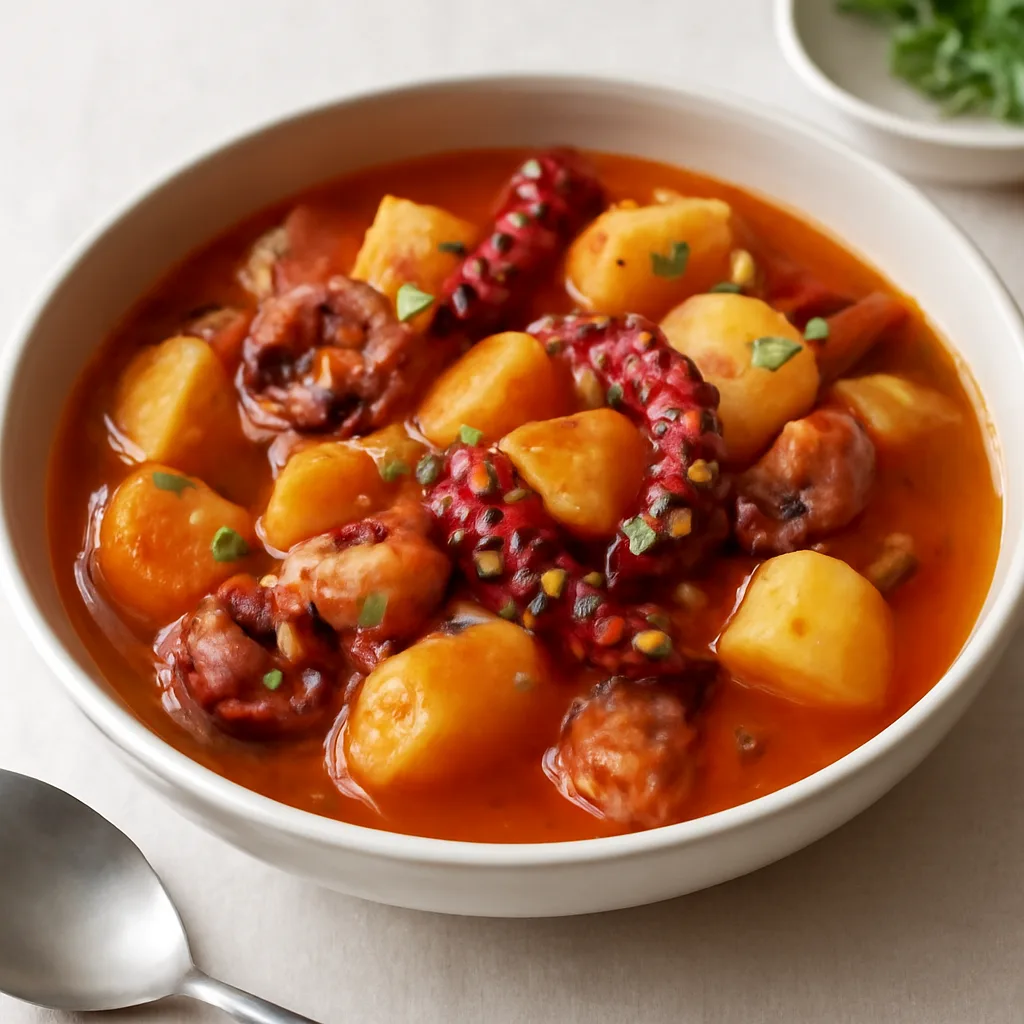
Octopus and Potato Stew
A stew with deep, rich flavors where octopus and potatoes are simmered until tender. The paprika adds visual appeal with a warm color, and serving it warm enhances the taste. This dish captures Mediterranean flavors, making it a great option to enjoy with family.
Main Ingredients
Related Themes
6
View0
Like1
AI recommendations0
CreatedAbout this recipe
Octopus and potato stew is a warm seafood stew made by boiling pre-cooked octopus and fried potatoes with water. Frying the potatoes in oil first helps the exterior heat evenly, which somewhat reduces the tendency to crumble during simmering and adds the potatoes’ cozy texture to the broth. Paprika is added after the potatoes are about halfway done to enhance color and texture. Use octopus only after it has boiled long enough to be tender, then slice and use it, and let it boil again in the stew so the flavors blend with the potatoes. However, boiling octopus for too long over high heat can make the texture feel tough, so after adding water, cover the pot and maintain a steady medium-low heat. When the potatoes can be pressed with a spoon and break apart smoothly, taste and adjust the final seasoning after resting a moment. Because the basic ingredients are simple, salt is safest to adjust at the end. If the broth seems thinner than expected, uncover and simmer a bit longer to reduce moisture; conversely, if the potatoes have absorbed too much moisture, add a little water gradually to reach the desired consistency.
Taste and Texture
The mild seafood flavor of octopus combined with the soft, cozy texture of potatoes, and paprika adds a gentle sweetness and fresh aroma. Since only salt and pepper are used for seasoning, the ingredients’ own flavors come through more clearly. When well finished, the potatoes are soft but still hold their shape, the octopus is chewy in bite-sized pieces, and the broth becomes slightly thickened from the starch released by the potatoes. If you want a thicker stew, you can simmer a bit longer until some potatoes start to crumble around the edges, but doing so can reduce the sharp texture of the paprika.
Key to making it delicious
- The octopus is fully cooked in boiling water first, and when the thickest part is cut and shows opaque inside, proceed to the next step.
- Cut the potatoes into pieces about 1 cm in size so the cooking is even; when the edges start to become slightly translucent while frying, it is a good time to add paprika.
- Paprika should be cut to pieces similar in size to the potatoes, and not added too early; if you don’t want it to become overly soft, add it after the potatoes are halfway cooked.
- After adding 2 cups of water, cover to maintain moisture for the potatoes to cook, and if the boil is too vigorous, lower the heat to reduce the roughness of the octopus.
- Taste at the end after the potatoes are tender, and adjust salt and pepper gradually depending on how much the broth has reduced.
Common mistakes
- If potato pieces vary in size, small pieces fall apart while large ones stay firm, so align the thickness before cutting and if you see large pieces that aren’t cooked, add a little water and simmer more.
- Starting with high heat the entire time can make the broth reduce quickly and burn on the bottom; check if there’s enough liquid on the bottom of the pot, then lower the heat and add a small amount of water if needed.
- If you add octopus before cleaning it properly or before parboiling, strong fishy smell or chewy texture can stand out, so clean it well and pre-boil in boiling water before using.
- If paprika has almost melted away in color and texture, it might have been added too early; next time brown the potatoes first halfway, then briefly cook and simmer.
- If too much salt is added early and the broth reduces too much, add a little water to re-simmer, then check potato doneness and adjust seasoning at the end.
Application Ideas
- If you want to keep the paprika’s crisp feel, add some of the listed amount only in the last few minutes, though this will soften the broth’s vegetable aroma noticeably.
- For a thicker texture, you can mash some cooked potato pieces at the edge of the pot and stir into the broth; this preserves chunks of potato but is not ideal if you want to keep the chunks intact.
- If you want a more pronounced pepper aroma, turn off the heat and grind in extra pepper to preserve the aroma instead of exposing it to heat.
- If you cut the octopus larger, its presence will be more pronounced; for a uniform texture and bite-sized portions, cut it the same size as the potatoes or slightly smaller.
Pairing ideas
- Let the broth settle a moment after turning off the heat, then ladle into a deep bowl with the potatoes and broth and serve warm.
- Serve with crusty bread on the side to dip into the remaining broth, but since the potatoes already provide substantial fullness, you can reduce bread amount for a lighter meal.
- Do a final sprinkle of pepper right after serving to add a bright finish that complements the mild octopus and potatoes.
Essential ingredients
Octopus
Potatoes
Paprika
Cooking oil
Water
Salt
Black pepper
Optional ingredients
No separate optional ingredients.
Cooking order
Prepare the octopus by cleaning, then simmer in boiling water for 5 minutes to tenderize.
Peel the potatoes and dice into 1 cm cubes.
Remove seeds from paprika and cut into pieces similar in size to the potatoes.
In a pot, heat the cooking oil over medium heat, then add the potatoes and sauté for 5 minutes.
When potatoes are halfway cooked, add paprika and sauté for 2 more minutes.
Add the cooked octopus, then pour in 2 cups of water, cover and simmer for 20 minutes.
Taste and adjust seasoning with salt and pepper, then turn off the heat and let rest briefly before serving.