View recipes
Check the reference data for the selected food.
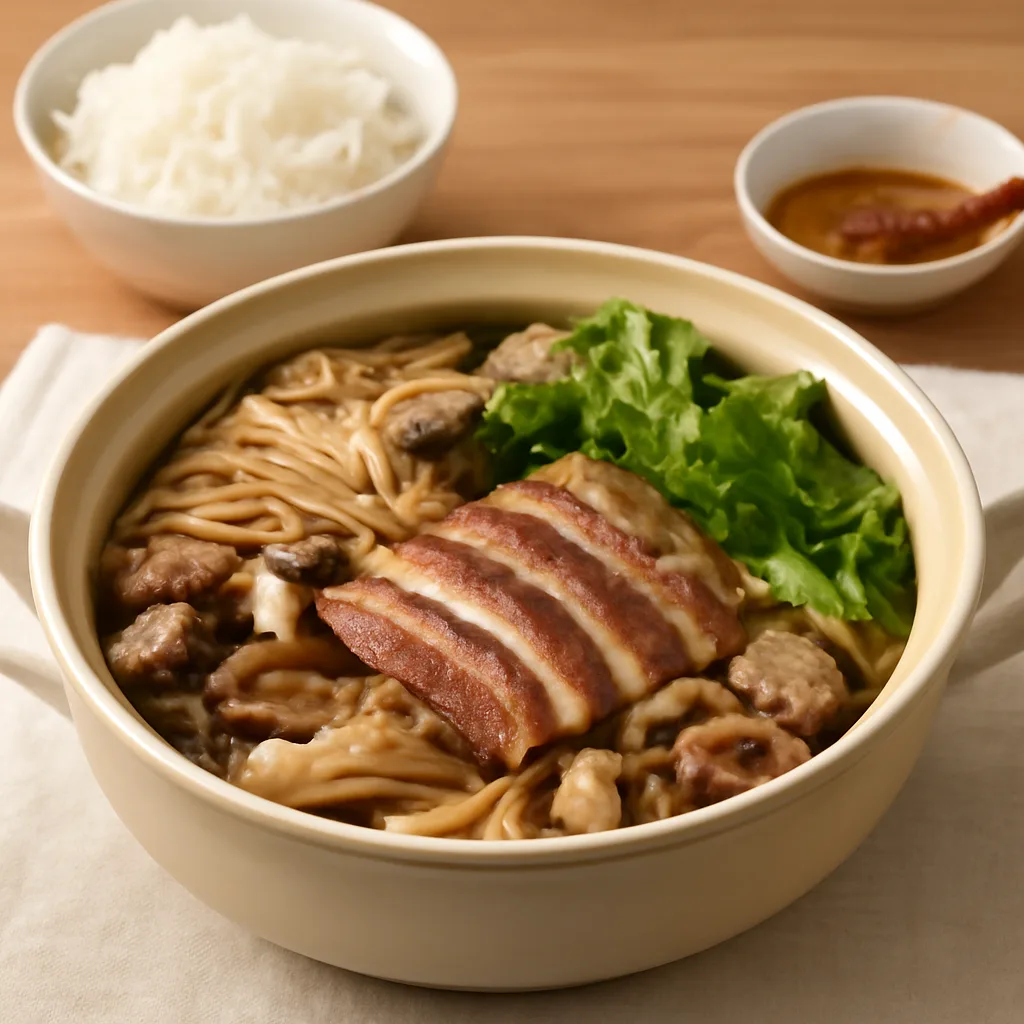
Duck and Mushroom Jeongol
Duck and mushroom jeongol is a dish whose appeal lies in the rich broth and the harmonious, savory flavor of duck and mushrooms. Simmered with tender onions to impart a deep taste.
Related Themes
7
View0
Like1
AI recommendations0
CreatedAbout this recipe
Oori beoseot jeongol is a light-clear hot pot where you first sear the outside of the duck to bring out a toasty, rich aroma, then add onions and mushrooms and simmer with water. This recipe uses 300 g duck and 500 ml water, so the broth isn’t too heavy and the ingredients’ flavors stay relatively distinct. Onions contribute sweetness and a soft texture as they cook, and mushrooms add umami to the broth. The key to finishing is how you handle the oil released from the duck. If you want a rich flavor, after searing, leave some of the rendered oil in and simmer; if you want a cleaner broth, skim off the excess oil and then add water. However, removing too much oil can weaken the duck’s distinctive flavor and the gloss of the broth. Although chives are listed as an ingredient, no step is given for when to add them. To preserve their aroma and color, it’s best to turn off the heat and add them to the hot broth briefly to wilt slightly; boiling for a long time doesn’t suit chives if you want their texture.
Taste and Texture
Golden-brown duck roasted to a savory, rich flavor, with the subtle sweetness of onion gently supporting it. Mushrooms stay moist and tender and blend naturally into the broth. The broth is simply seasoned with salt and pepper, so the duck and mushroom flavors take center stage. The chives added at the end provide a fragrant finish and a light crunch.
Key to making it delicious
- Sauté the duck over medium heat until the outside is browned and fragrant; if there’s a lot of liquid in the pan, it may mean you added too much at once or the heat was too low, so cook in batches or raise the heat slightly.
- After adding onions and mushrooms, briefly sauté them to let the onion sweetness and mushroom aroma infuse into the fat; if the mushrooms become too small or release too much water, don’t fry for long—move to the boiling stage with water.
- When the water starts to boil, reduce to medium heat to prevent the broth from reducing too quickly and to cook the ingredients evenly; if the liquid level drops faster than expected, lower the heat and add water gradually as needed.
- Taste the broth after simmering well, then season with salt and pepper. If you salt too early, the flavor can become too salty as it reduces during simmering.
- Add chives at the end, just with the heat, to preserve their bright aroma and color. If the chives are very thick or tough, add them just before turning off the heat and heat briefly.
Common mistakes
- If you add water before browning the duck, the surface may lack a toasted aroma and the broth may taste monotonous, so wait until the duck color changes and the edges are cooked before adding the next ingredients.
- If you don’t skim the duck fat from the pan, a thick oil layer on the broth’s surface can feel heavy; skim some of the pooled fat with a spoon before adding water, but don’t remove all the aroma.
- Sautéing mushrooms and onions for too long causes moisture to evaporate, making mushrooms tough and onions prone to burning; stop once the aroma rides up and the onions are slightly translucent, then add water.
- Keeping it on high heat too long can reduce the broth too much, making it overly salty and the ingredients dry; after it starts boiling, reduce to medium and monitor the liquid level.
- If you add the chives at the very beginning and simmer long, the color dulls and aroma fades; add them at the end to finish.
Application Ideas
- Because the mushroom varieties aren’t fixed, using different textures by mixing mushrooms can change the broth’s aroma and chewiness; if you use a lot of juicy mushrooms, re-adjust the seasoning at the end.
- For a clearer, lighter jeongol, skim slightly more oil from the sautéed duck before simmering, keeping in mind the nutty flavor will be a bit reduced.
- If you want a more pronounced pepper aroma, add black pepper toward the end rather than during the mid-cook, so the aroma remains distinct without overpowering the mushrooms and chives.
- If you want a softer sweetness from onions, slice them thicker so they retain some texture after simmering; for a texture that dissolves more into the broth, slice thinner.
Pairing ideas
- Serve immediately in a wide bowl so the duck, onions, and mushrooms are visible with the broth to highlight textures.
- Top with chives and toss lightly in the broth before dividing into individual bowls so the aroma spreads evenly.
- Because the broth is relatively light, it pairs well with rice; portion the broth to match the number of diners.
- At the table, you can add more pepper if desired, but don’t add more if the pepper aroma is already strong and would overpower the duck and mushroom flavors.
Essential ingredients
Duck
Chives
Onion
Mushrooms
Optional ingredients
No separate optional ingredients.
Cooking order
Cut the duck into bite-size pieces, julienne the onion, and slice the mushrooms.
Add the duck to a frying pan and sauté over medium heat for about 5 minutes until the exterior is golden.
Add the onion and mushrooms and sauté for another 3 minutes until well combined.
Pour 500 ml of water and bring to a boil. Once boiling, reduce to medium heat.
Simmer for about 10 minutes until ingredients are cooked through, then adjust seasoning with salt and pepper.
Turn off the heat and serve in bowls while warm.