View recipes
Check the reference data for the selected food.
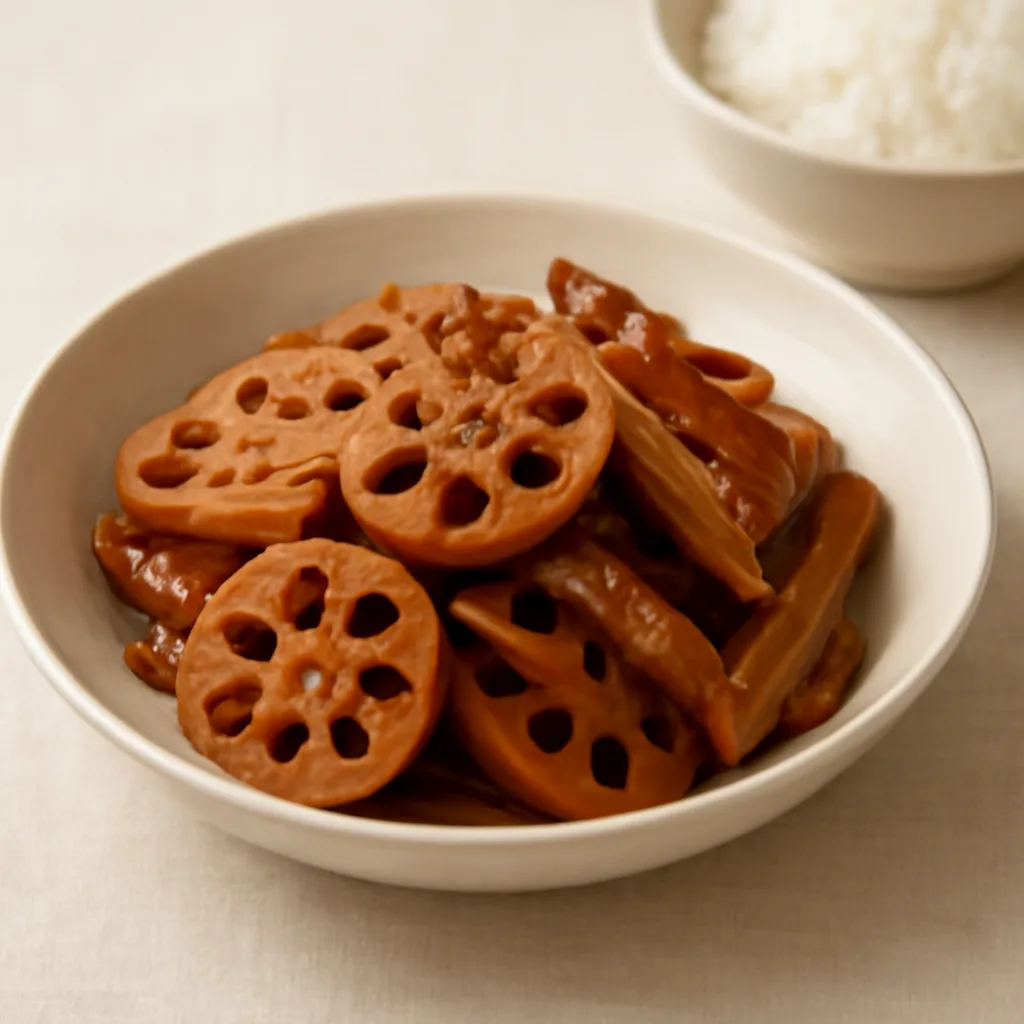
Braised Lotus Root and Burdock with Soy Sauce
A side dish made by braising lotus root, burdock, carrot, and shiitake mushrooms in soy sauce; features a sweet and savory flavor. Great when served with rice.
Main Ingredients
Related Themes
5
View0
Like1
AI recommendations0
CreatedAbout this recipe
Braised lotus root and burdock with shiitake mushrooms in a soy sauce, sugar, and garlic glaze, making a savory-sweet side dish that pairs nicely with rice. Slice lotus root to a uniform thickness to reveal the cross-sectional holes and a crisp bite, and cut burdock not too thick so it becomes tender in roughly the same time as the lotus root. The core of the braise is gradually reducing a water level that covers the ingredients to match the seasoning intensity. When the liquid is reduced to about half, glossed brown on the surface of the ingredients, and the thickest lotus root piece is pressed to a center done, you can turn off the heat and let it rest briefly. However, since the sweetness and saltiness intensify as the braise cooks longer, if you don’t want a strongly reduced sauce, leave a little liquid at the end to finish it off. Carrot and shiitake mushrooms contain more moisture and cook faster than lotus root and burdock. In recipes that cook all ingredients at once, thinly shave the carrot and slice the shiitake to match the cooking times of the firmer ingredients.
Taste and Texture
The braise tastes sweet and savory from soy sauce and sugar, with garlic aroma, and shiitake mushrooms gently support the savoriness of the glaze. As the braising liquid reduces, the flavor more distinctly soaks into the surface of the ingredients. Lotus root becomes crisp-tender when moderately cooked, burdock provides a fibrous chew, carrots add gentle sweetness, and shiitake mushrooms stay moist and chewy for contrast.
Key to making it delicious
- If you cut lotus root and burdock into about 0.5 cm thickness as evenly as possible, the cooking rate will be similar, reducing the chances of some pieces becoming too hard and others overcooked.
- Start with enough water to cover the ingredients, then after it starts boiling keep at medium heat so the liquid reduces slowly. If the heat is too high, the liquid will reduce first and the firmer lotus root and burdock may remain undercooked inside.
- If the liquid flavor already tastes salty, don’t braise further, and add only a small amount of water as needed until the ingredients are cooked through.
- After turning off the heat, letting it rest briefly allows the remaining glaze to soak into the surface and cross-sections, but if you want a crisper texture, don’t leave it too long and plate after it cools slightly.
Common mistakes
- If lotus root and burdock vary in thickness, thinner pieces will break easily and thicker pieces may stay firm. Match thickness to the thickest piece, and if there are many thin slices, reduce braising time and check frequently.
- If you reduce the liquid while it’s boiling vigorously halfway, the bottom glaze may become sticky and flavors won’t distribute evenly to the ingredients. If glaze sticks to the bottom, lower heat and gently swirl the pot or carefully turn the ingredients.
- If you cut carrot to the same thickness as lotus root, the carrots may stay firm until the braise ends. Slice them thinly or, if thicker, check earlier to remove at your preferred texture.
- If you reduce until the liquid almost disappears, the soy sauce and sugar concentration will be stronger than expected and may taste salty with rice. When the glaze is glossy and a little liquid remains, turn off the heat and let rest to settle flavors.
Application Ideas
- If you want the shiitake texture to be more chewy, don’t slice too thin—cut a bit thicker so the shape remains after braising, compared to the lotus root.
- If you want a milder flavor, don’t add all the sugar at once; taste the liquid after it has reduced and add a portion later, adjusting to the natural sweetness of the vegetables.
- If you prefer a soupier dish, turn off the heat a little earlier than when it is halfway reduced and ensure the firmer ingredients are cooked. Conversely, for a deeper braise, simmer a bit longer over low heat, keeping in mind that the seasoning can intensify quickly.
- If burdock’s fibrous texture is too much, increase the lotus root ratio and slice burdock thinner so it cooks tenderly within the same seasoning.
Pairing ideas
- Serve with warm rice on a small plate; the sweet-salty braise glaze enhances the rice flavor. If there is leftover braising liquid, spoon a little over the lotus root and burdock to keep them moist, but if the liquid is too thick, plate mainly the vegetables to avoid oversalted flavor.
- Pair with grilled fish or mild tofu as a side dish to a main course with a milder sauce, allowing the soy glaze and the vegetable chew to contrast.
Essential ingredients
Lotus root
Burdock root
Carrot
Shiitake mushroom
Water
Optional ingredients
No separate optional ingredients.
Cooking order
Peel the lotus root and burdock; cut into 0.5 cm thick slices.
Peel the carrot and slice thinly.
Remove the stems from the shiitake mushrooms and slice.
Put lotus root, burdock, carrot, and shiitake mushrooms in a pot and add water to cover the ingredients.
Add 2 tablespoons soy sauce, 1 tablespoon sugar, and 1 teaspoon minced garlic; simmer over medium heat.
Simmer for about 15 minutes until the liquid is reduced to half.
Turn off the heat and let sit briefly to allow flavors to soak in.