View recipes
Check the reference data for the selected food.
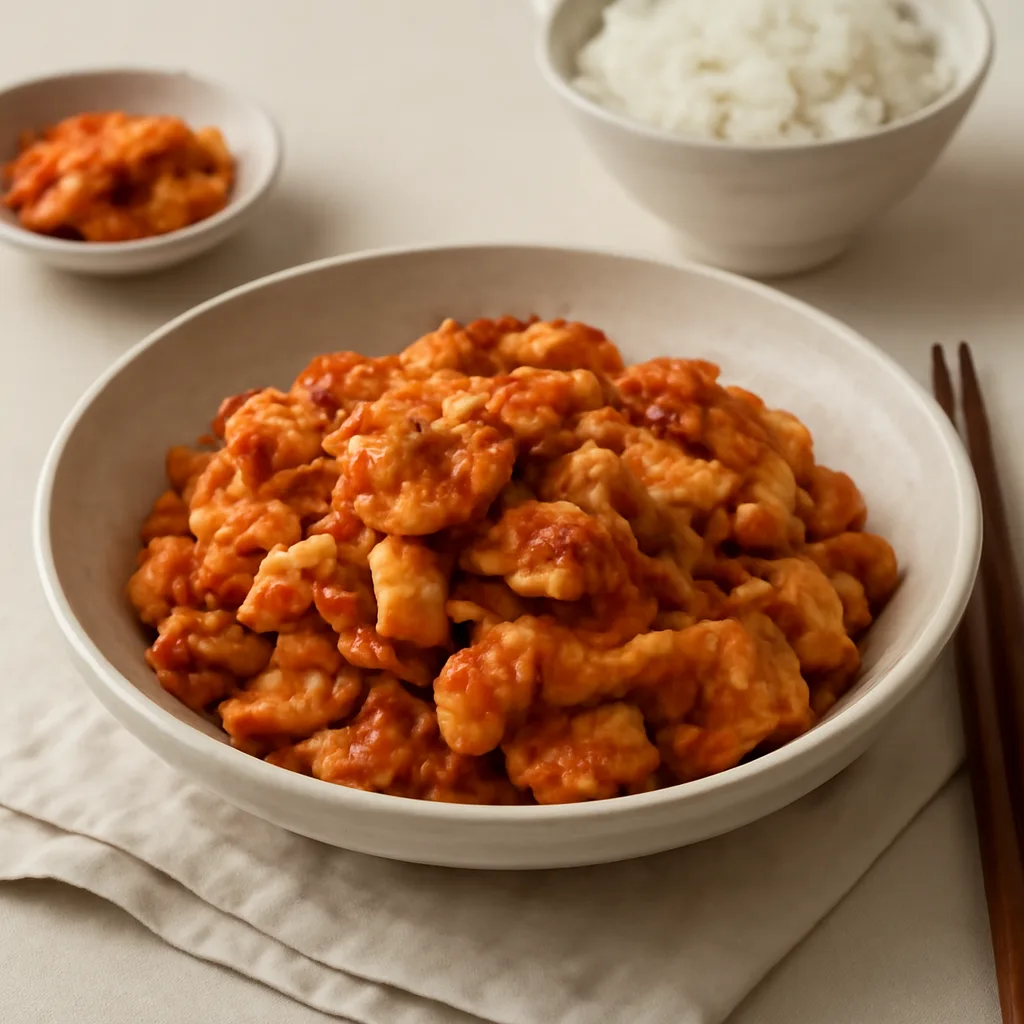
Chicken Breast Kimchi Stir-Fry
Chicken Breast Kimchi Stir-Fry is a simple yet delicious dish where tender chicken breast and spicy kimchi come together. It features a deep flavor from the harmony of gochujang and soy sauce, with a touch of brightness from vinegar.
Related Themes
8
View0
Like1
AI recommendations0
CreatedAbout this recipe
Chicken breast kimchi stir-fry is a simple stir-fry dish that pairs bland chicken breast with the sourness and spiciness of kimchi for a tasty accompaniment to rice. Gochujang and soy sauce unify the kimchi flavors, and a small amount of vinegar added at the end helps keep the acidity bright as it cooks down. Since chicken breast dries out and becomes chewy when overcooked, it’s best to start by stir-frying just until the exterior turns white, then add kimchi and seasonings and finish cooking only as needed. Because kimchi saltiness and sourness vary by product and aging, use salt very lightly at the initial seasoning and adjust to taste just before finishing for safety. Cooking time is about 20 minutes, and cutting ingredients into uniform bite-sized pieces makes it easy to achieve the right doneness quickly. If there is a lot of kimchi juice, reduce some moisture before adding the seasonings to achieve a wok-friendly texture and bright flavor.
Taste and Texture
Well-cooked kimchi is soft and umami-rich, and the addition of gochujang and soy sauce gives a spicy-salty flavor that evenly permeates the chicken breast. Vinegar acts more to finish the taste lightly rather than delivering a strong sour note. The chicken breast should be moist with a chewy bite, and the kimchi should not release too much moisture so it clings to the ingredients. If the kimchi is very sour, the presence of vinegar becomes more pronounced, so it’s better to reduce the final amount.
Key to making it delicious
- Cut the chicken breast into similar bite-sized pieces to minimize tiny overcooked bits; if some pieces are thicker, start with the thicker ones in the pan.
- Preheat the pan over medium heat before adding the chicken breast so the surface turns white quickly and moisture doesn’t escape excessively; if the pan feels cool, extend the preheating time.
- After adding kimchi, check that the liquid pooled on the pan bottom reduces and ingredients meld with a gloss before adding gochujang and soy sauce to prevent the sauce from spreading too thin.
- Gochujang tends to scorch if left on the hot pan bottom for too long; mix it with the kimchi moisture and the chicken breast while stir-frying.
- Add vinegar just before turning off the heat and mix briefly to keep the aroma, and if the kimchi is already tart or very juicy, using less than a teaspoon may yield a more balanced result.
Common mistakes
- Overcooking the chicken breast from the start can make the surface hard and the texture rough, so after the surface turns white, continue cooking with the kimchi and remaining doneness.
- If you pour too much kimchi juice, the stir-fry can become watery and the seasoning may fade; drain some of the kimchi juice before adding seasonings, or cook until moisture reduces before seasoning.
- If you heavily salt at the base and add soy sauce in exact amounts, the kimchi’s salinity can make it taste salty, so use salt sparingly and adjust soy sauce after tasting the kimchi.
- If you add gochujang and don’t stir, it may stick to the pan bottom and taste burnt; at the time of adding seasonings, maintain medium heat and mix ingredients quickly.
- Adding vinegar too early and cooking too long can mellow its bright aroma, so add it at the final stage after other seasonings are well mixed and briefly stir.
Application Ideas
- To soften heat, reduce gochujang and simmer kimchi moisture to extract umami, then adjust with soy sauce.
- If the kimchi isn’t sour enough, you can add the recorded vinegar at the end to sharpen the flavor, but for very sour kimchi, adding the same amount may not be ideal.
- To keep chicken breast juicier, don’t cut the pieces too small; after the outer layer is cooked, add kimchi and seasonings for a quick finish.
- If serving over rice, stop cooking when the sauce still has some moisture left instead of fully evaporating; for a side dish, cook a bit longer to thicken the sauce.
Pairing ideas
- Serve with warm rice to naturally pair the rich kimchi and gochujang flavors, and if the stir-fry has a lot of moisture, reduce by simmering once more before serving on rice.
- Pair with a mild egg dish to soften the spicy, sour kimchi stir-fry flavor.
- When eating with lettuce or perilla leaves for wrapping, be careful not to leave too much sauce so the greens don’t get soggy.
Essential ingredients
닭가슴살
김치
고추장
간장
식초
소금
Optional ingredients
No separate optional ingredients.
Cooking order
닭가슴살을 한 입 크기로 썰고, 소금으로 밑간을 해둡니다.
팬에 식용유를 두르고 중불로 예열합니다.
예열된 팬에 닭가슴살을 넣고 겉면이 하얗게 변할 때까지 볶습니다.
김치를 넣고 함께 볶아 김치의 수분이 날아갈 때까지 조리합니다.
고추장과 간장을 넣고 잘 섞어가며 볶습니다.
마지막으로 식초를 넣고 한 번 더 볶아 향을 더합니다.
불을 끄고 접시에 담아냅니다.